
WHAT DOES A VRV SYSTEM COST? BREAKING DOWN CAPEX AND TOTAL COST OF OWNERSHIP
VRV system cost can vary significantly even between two buildings with the same 500 m² floor area. The difference is not determined by the air-conditioning brand alone. It also depends on the design cooling load, number of indoor units, refrigerant piping length, control system, site conditions, and the contractor’s scope of work.
That is why asking “How much does VRV cost per HP?” or “How much does it cost per square meter?” is rarely enough to establish an accurate VRV system budget. Owners need to understand what is included in the price, where additional costs may arise, and which solution offers the best long-term value over the building’s life cycle.
1. Before asking “How much does a VRV system cost?”, define these 5 key factors
There is no fixed VRV system price that applies to every project. A reasonably accurate estimate starts with five key factors:
- Total cooling load: Determined by floor area, solar exposure, building envelope materials, occupancy, heat-generating equipment, and how each space is used.
- Number of conditioned spaces: More rooms generally require more indoor units and additional refrigerant piping.
- Building type: Villas, offices, hotels, and restaurants have different occupancy patterns and operating requirements.
- Indoor unit type: Cassette, concealed ducted, wall-mounted, and ceiling-suspended units each have different equipment costs and installation requirements.
- Distance between outdoor and indoor units: This directly affects the quantities of copper piping, insulation, control wiring, additional refrigerant, and installation labor.
For this reason, price per square meter should not be used as the sole basis for estimating VRV system costs. Consider two 800 m² villas. A property with numerous small rooms, concealed indoor units above the ceiling, and complex refrigerant piping routes may require a substantially different bill of quantities (BOQ) from an open-plan villa of the same size.
A more reliable approach is to provide the HVAC contractor with floor plans and operational requirements so they can calculate the cooling load, develop the system configuration, and prepare a detailed quantity takeoff before the budget is finalized.
2. What does the upfront cost of a VRV system include?
A complete VRV system cost can be summarized as:
VRV System Cost = Equipment + Refrigerant Piping + Electrical & Condensate Drainage + Installation + Controls + Commissioning + Contingencies
2.1. Outdoor and indoor units: the most visible cost component
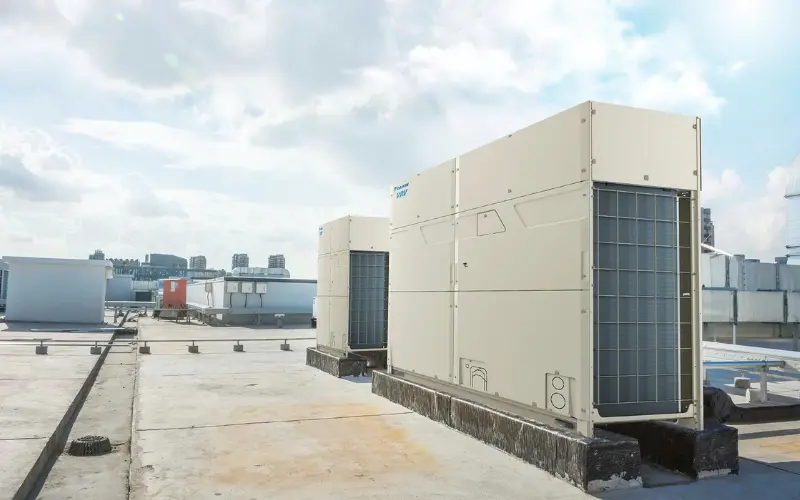
Equipment is usually the first cost component owners consider. It typically includes outdoor units and modules, indoor units, REFNET branch joints, and controllers.
However, two quotations with the same total capacity — for example, 30 HP — are not necessarily equivalent.
One proposal may use standard cassette units, while another may use concealed ducted units to meet architectural and aesthetic requirements. Outdoor units from different product generations may also vary in efficiency, operating range, connectivity, and control technology.
When comparing quotations, consider at least the following:
Model – Capacity – COP/EER or Equivalent Efficiency Rating – Indoor Unit Type – Controller – Features – Warranty.
Looking only at total HP and the final price can result in comparisons between systems that do not meet the same technical specifications.
2.2. Copper piping, insulation, and refrigerant-line materials
Refrigerant piping is one of the areas where VRV installation costs can vary significantly.
In addition to copper piping, the BOQ may include insulation, REFNET joints, fittings, supports, brazing materials, and additional refrigerant based on the actual piping length.
Copper is also a variable-cost material. J.P. Morgan data cited in the source article show copper prices exceeding USD 14,500 per ton in January 2026 before trading at around USD 13,000 per ton in mid-April, illustrating the degree of price volatility that can affect material costs.
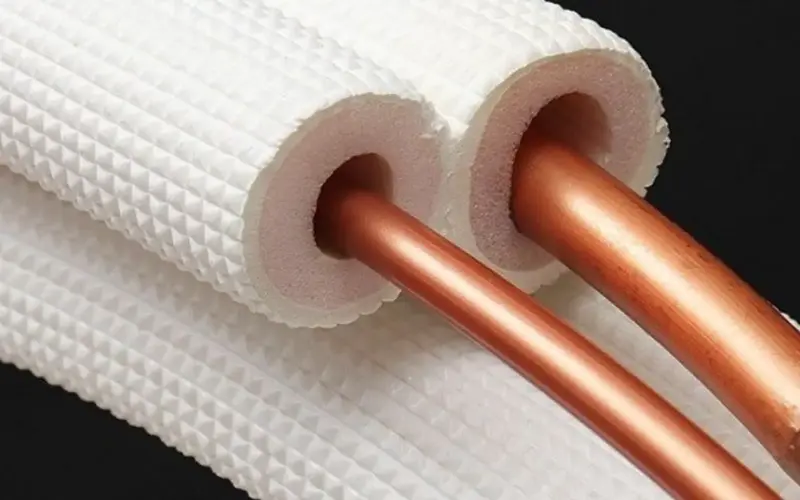
This is particularly relevant for VRV projects involving hundreds of meters of refrigerant piping. Relocating outdoor units or modifying piping routes can significantly increase copper requirements.
When reviewing a quotation, owners should therefore look beyond the copper pipe brand and check the pipe specifications, wall thickness, estimated quantities, and how additional quantities or variations will be calculated.
2.3. Electrical work, condensate drainage, and ancillary materials
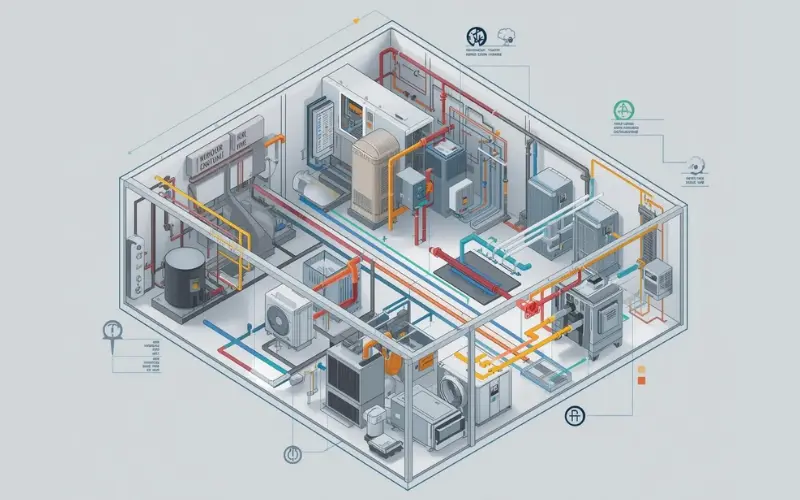
A common budgeting mistake is to treat equipment prices as if they represented almost the entire VRV system investment. In reality, a complete and operational system also requires a range of supporting materials and works, including:
- Power and control/signal cabling.
- Circuit breakers and electrical panels.
- Condensate drain piping.
- Condensate pumps, where required.
- Cable trays, threaded rods, and support brackets.
- Wall and ceiling penetration materials.
This is why an equipment-only quotation should not be confused with a quotation for a complete, operational VRV system.
2.4. Installation and commissioning: not the place to cut corners
VRV installation involves much more than installing equipment and connecting refrigerant piping.
A proper installation process includes equipment handling and installation, pipe brazing, nitrogen pressure testing, vacuum evacuation, refrigerant charging, electrical and control wiring, and condensate drainage testing. The system must then be tested, commissioned, adjusted, and verified before final acceptance.
Commissioning is a critical part of this process. Cutting back on testing and system adjustments may reduce the initial installation cost, but it can lead to problems during operation, including refrigerant leaks, condensate drainage issues, communication faults, and poor system performance.
For this reason, a lower installation price does not necessarily mean a lower overall cost. Proper installation, testing, and commissioning are essential to reliable and efficient system operation.
2.5. Central controls, BMS, IoT, and smart home integration
The level of system control can also have a significant impact on VRV system costs.
Control options can range from:
Individual room controllers → Central controller → Building management system (BMS) → IoT/Smart Home integration.
For high-end villas, owners may require smartphone control, Home/Away/Sleep modes, sensor integration, or connectivity with a broader smart-home system.
For offices, hotels, and commercial buildings, priorities typically shift toward operating schedules, multi-zone management, equipment status monitoring, and centralized fault management.
This trend is also reflected in Vietnam’s HVAC market, with 2026 reports pointing to a shift toward inverter and VRF technologies, integrated controls, and services focused on optimizing performance throughout the system life cycle.
3. Hidden costs that can push a VRV project over budget
A preliminary VRV quotation may not account for every condition or variation that can arise during construction.
Potential additional costs include:
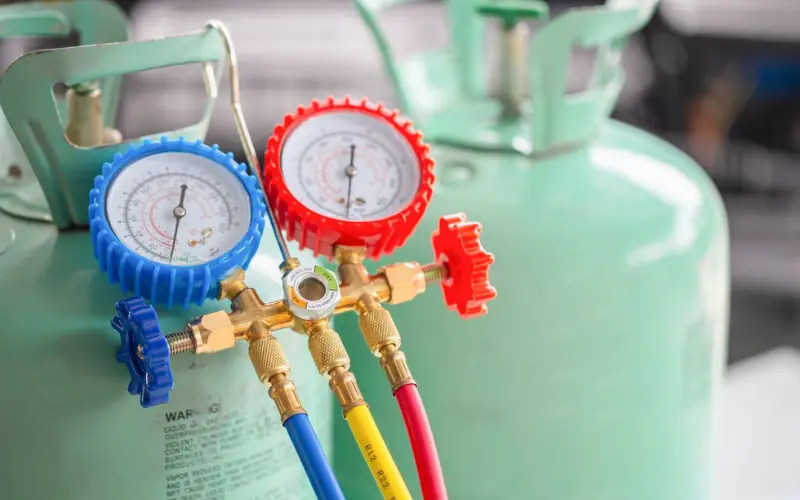
- Additional refrigerant for long piping runs.
- Refrigerant piping rerouting due to architectural or interior design changes.
- Core drilling and slab penetrations.
- Scaffolding or access equipment for work at height.
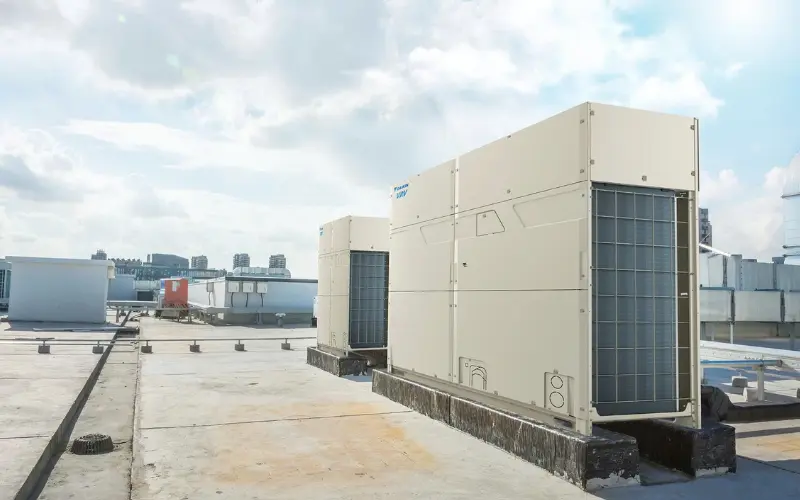
- Crane rental for lifting outdoor units to rooftops.
- Additional condensate pumps.
- Vibration and noise-control measures.
- Changes to indoor unit types after design approval.
- Gateways or interfaces for BMS/smart-home integration.
- Power supply works outside the HVAC scope.
- Maintenance costs after the included warranty or maintenance period.
For example, Quote A may initially appear cheaper than Quote B. However, if Quote A excludes crane work, power supply, core drilling, and BMS integration, its final project cost may ultimately exceed Quote B.
The key principle when evaluating VRV system costs is therefore simple:
Do not compare the total price alone. Compare the Scope of Work + BOQ + Equipment Models + Exclusions.
4. How 2026 market trends are reshaping VRV system costs
Equipment prices are not the only factor changing. Market conditions and energy-efficiency requirements are also influencing how owners evaluate HVAC investments.
4.1. Volatile copper prices mean quotations need a validity period
Given the volatility of copper prices in 2026, material quotations cannot remain valid indefinitely.
For large projects, finalizing the design and BOQ early provides better control over material quantities. Repeatedly relocating equipment or changing refrigerant piping routes during construction can lead to significant cost overruns.
4.2. Inverter technology, VRV/VRF, and low-GWP refrigerants are becoming more important
Vietnam’s HVAC market is moving from fixed-speed equipment toward inverter and VRF technologies, connected controls, and refrigerants with lower global warming potential (GWP).
As stated in the source article, Vietnam has also established a roadmap for managing equipment containing high-GWP HFC refrigerants. Under Decision No. 469/QĐ-TTg, certain air-conditioning equipment categories, including VRV/VRF systems using refrigerants with a GWP above 750, are scheduled to face production and import restrictions from 2029.
This means that equipment technology and refrigerant selection increasingly need to be considered from a long-term perspective rather than based solely on current purchase price.
4.3. Green building standards are changing HVAC selection criteria
For projects pursuing LOTUS, LEED, or EDGE certification, HVAC selection is no longer based solely on equipment purchase price. Lifecycle energy efficiency, control capabilities, and operational monitoring are becoming increasingly important.
As a result, the system with the lowest initial CAPEX is not necessarily the most economical solution over the building’s life cycle.
5. Lower CAPEX does not always mean lower cost: consider the TCO of a VRV system
This is an important consideration that owners can easily overlook when evaluating VRV system costs.
CAPEX represents the initial cost of purchasing and installing the system. Once the building is operational, however, additional costs continue to accumulate through electricity consumption, maintenance, repairs, replacement parts, and losses associated with unplanned downtime.
In simple terms:
TCO = CAPEX + Energy consumption + Maintenance + Repairs + Replacement parts + Downtime costs – Lifecycle savings.
Instead of asking:
“Which system costs less upfront?”
A more useful question is:
“Over 10–15 years of operation, which system will cost less overall while providing more reliable performance?”
This is more than just theory. Vietnam’s commercial HVAC market is increasingly focused on life-cycle cost savings, advanced control systems, energy efficiency, and performance-based maintenance contracts.
A VRV system that costs more initially but offers higher efficiency, properly sized capacity, effective controls, and easier maintenance may therefore achieve a lower TCO over its operating life.
6. How to optimize VRV system costs without choosing the cheapest equipment?
There are five practical ways to optimize VRV costs:
- Calculate the cooling load accurately: Oversizing increases initial investment and can lead to inefficient part-load operation.
- Optimize outdoor and indoor unit locations: Efficient piping routes can reduce copper piping, insulation, and installation labor.
- Select indoor units according to actual requirements: Not every zone requires the highest-specification indoor unit.
- Coordinate HVAC, architectural, electrical, and ceiling works early: Early coordination helps minimize rework and piping changes after interior works are completed.
- Compare TCO, not just CAPEX: Consider initial investment, energy consumption, maintenance requirements, and expected system life.
The greatest savings often come not from choosing cheaper equipment, but from getting the system design right from the outset.
For villas, offices, restaurants, and hotels, calculating the cooling load and preparing the BOQ during the design stage can provide owners with a much clearer budget before the final VRV brand and system configuration are selected.
7. What should owners request when reviewing a VRV quotation?
Before signing a contract, owners should ask the HVAC contractor to provide or clarify:
- Cooling-load calculations.
- Outdoor and indoor unit models.
- System schematic diagram.
- Bill of quantities (BOQ).
- Copper piping quantities and specifications.
- Scope of work.
- List of exclusions.
- Installation schedule.
- Warranty terms.
- VRV system maintenance plan.
- Method for calculating variations or additional costs.
- Control/BMS solution, where applicable.
This checklist helps place competing quotations on a comparable basis and reduces the risk of choosing the lowest initial bid only to face significant additional costs during construction.
8. Conclusion: evaluating VRV system cost requires a life – cycle perspective
The cost of a VRV system extends well beyond the price of the outdoor and indoor units. It should be evaluated across three levels: initial investment – operating cost – life – cycle cost.
A system with the lowest CAPEX does not necessarily deliver the lowest TCO. Accurate cooling-load calculations, optimized piping routes, appropriate equipment selection, proper installation and commissioning, and a well-planned maintenance strategy are all essential to controlling costs over the life of the system.
If you are planning a VRV system for a villa, office, restaurant, hotel, or commercial building, Dong SaPa can review your floor plans, floor area, space functions, and operational requirements to recommend an appropriate system configuration, calculate the cooling load, and prepare a VRV cost estimate based on actual project needs.
9. Frequently asked questions about VRV system costs
9.1.s VRV installation cost calculated by square meter or by capacity?
Neither factor alone provides an accurate estimate. Floor area should not be used as the sole basis for pricing a VRV system. A reliable estimate should consider the cooling load, total system capacity, number and type of indoor units, copper piping length, control system, and actual site conditions.
9.2. What share of the total VRV system cost is equipment??
There is no fixed percentage that applies to every project. In addition to outdoor and indoor units, total system cost can be significantly affected by copper piping, insulation, electrical work, condensate drainage, installation labor, controls, and commissioning. Projects with long piping runs or complex technical requirements will typically have a higher proportion of material and installation costs.
9.3. Why can two VRV quotations with the same capacity have very different prices??
Two systems with the same total capacity do not necessarily have the same technical configuration. Differences may come from the outdoor unit model, number and type of indoor units, material BOQ, copper piping specifications, scope of work, control system, commissioning requirements, warranty terms, and items excluded from the quotation.
9.4. Is a VRV system more energy – efficient than standalone split air conditioners?
Not in every situation. Energy efficiency depends on cooling-load design, zoning, equipment efficiency, operating hours, and how the system is controlled and operated. VRV systems can modulate capacity according to actual cooling demand, but this advantage depends on proper system design and operation.
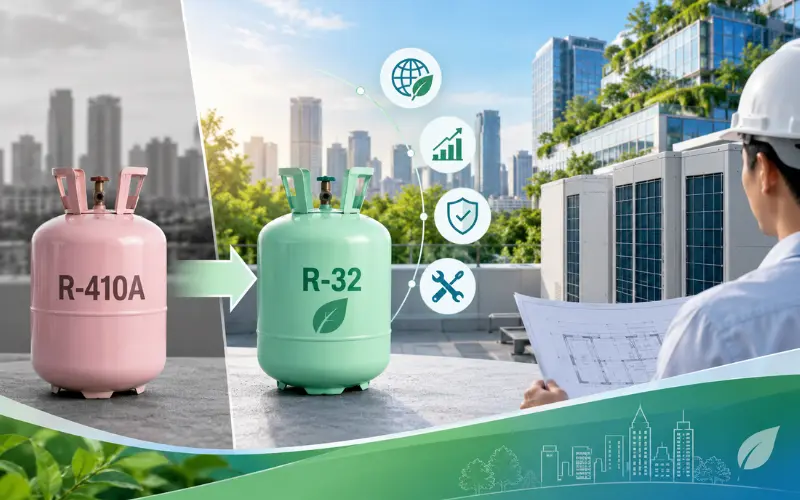
9.5. Should i choose a VRV system using R32 or R410A?
The decision should be based on the equipment model, technical specifications, safety requirements, refrigerant GWP, and long-term operating requirements. The choice should not be based simply on the assumption that one refrigerant “cools better” than another.
9.6. Is a VRV air – conditioning system a good choice for a villa?
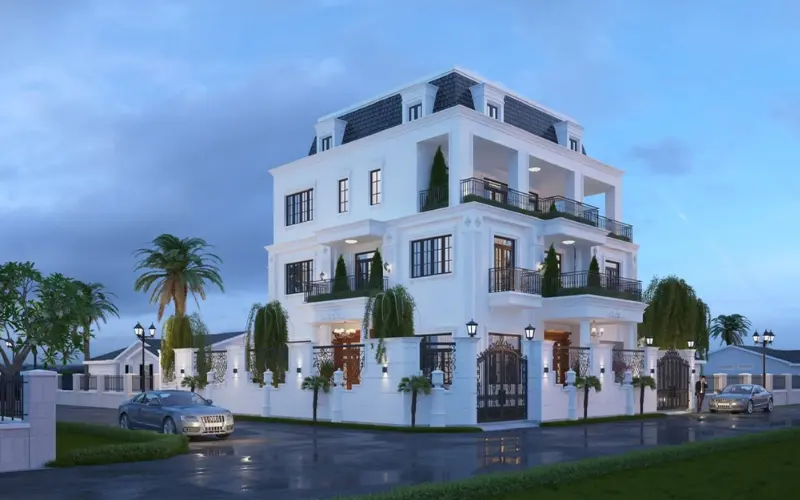
VRV can be a suitable solution for villas with multiple rooms, high architectural and aesthetic requirements, and a need for independent temperature control across different zones combined with centralized management. However, the cooling load should be calculated and both initial and operating costs compared with alternative HVAC solutions before a final decision is made.
9.7. How can owners minimize cost overruns during VRV installation?
Finalize the system design and BOQ before construction begins, and clearly define refrigerant piping routes, outdoor and indoor unit locations, scope of work, and exclusions. When reviewing quotations, compare the BOQ + Equipment Models + Scope of Work + Exclusions, rather than looking only at the total price..
EAST SAPA ENGINEERING CORPORATION
- Showroom: 456/72 Cao Thang (Extended), Hoa Hung Ward, Ho Chi Minh City.
- 24/7 Project Hotline: 0988 200 200 (Mr. Vinh)
- Email: quangvinh@dongsapa.com.vn
- Website: dongsapa.com.vn
Other news