
7 VRV System Advantages Property Owners Should Know
For buildings with dozens of rooms or multiple independently operated zones, air conditioning is about more than simply providing sufficient cooling. Property owners must also consider outdoor-unit space, energy consumption, zone-level control, architectural aesthetics, and long-term operating costs.
With standalone split systems, the number of outdoor units can increase quickly with the number of rooms, taking up valuable technical space and affecting the building façade. At the same time, operating an air-conditioning system without properly matching actual cooling demand can lead to unnecessary energy consumption. This is why VRV systems are increasingly considered for offices, hotels, villas, showrooms, and other multi-room buildings. By connecting multiple indoor units, modulating capacity to match cooling demand, and providing independent zone control, VRV systems offer significant operational advantages. Here are seven key VRV system advantages property owners should consider before making an investment decision
1. What Is a VRV system, and why is it increasingly used?
1.1 How a VRV system works
VRV stands for Variable Refrigerant Volume, an air-conditioning technology that adjusts refrigerant flow according to actual cooling demand.
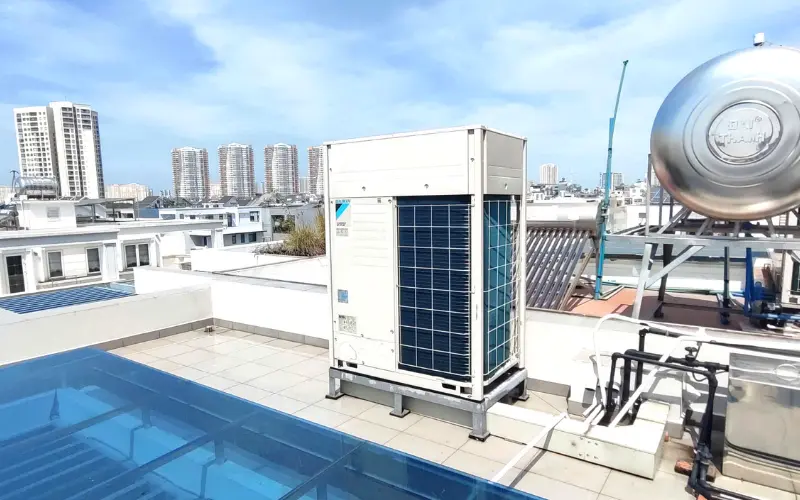
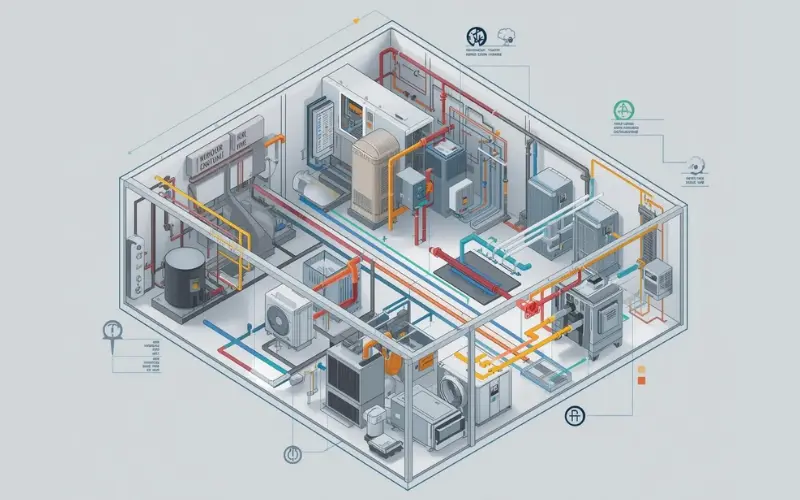
Unlike standalone systems, where individual indoor units typically require dedicated outdoor units, a single VRV outdoor unit or modular outdoor-unit combination can serve multiple indoor units. Inverter-driven compressors modulate capacity according to cooling demand rather than continuously operating at maximum capacity.
This makes VRV particularly suitable for buildings with multiple rooms or zones that operate at different times.
1.2 Which Buildings Are a Good Fit for VRV?
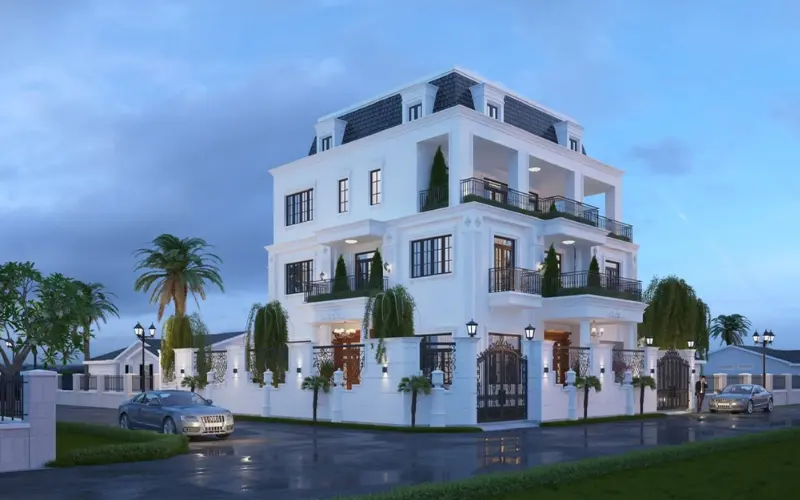
VRV systems are commonly considered for offices, commercial buildings, hotels and resorts, high-end villas, showrooms, and other properties with multiple zones requiring independent temperature control.
VRV is particularly worth considering when a property requires both flexible zone control and centralized HVAC management.
2. Key VRV System Advantages Property Owners Should Know
The value of VRV does not come from a single feature. Its advantages become most apparent when space, energy performance, operation, architectural requirements, and long-term system management are considered together throughout the building life cycle
2.1 VRV reduces outdoor-unit space requirements
One of the key challenges in a multi-room building is finding sufficient space for outdoor units. If each room uses a separate air-conditioning system, balconies, rooftops, and technical areas can quickly become crowded with equipment.
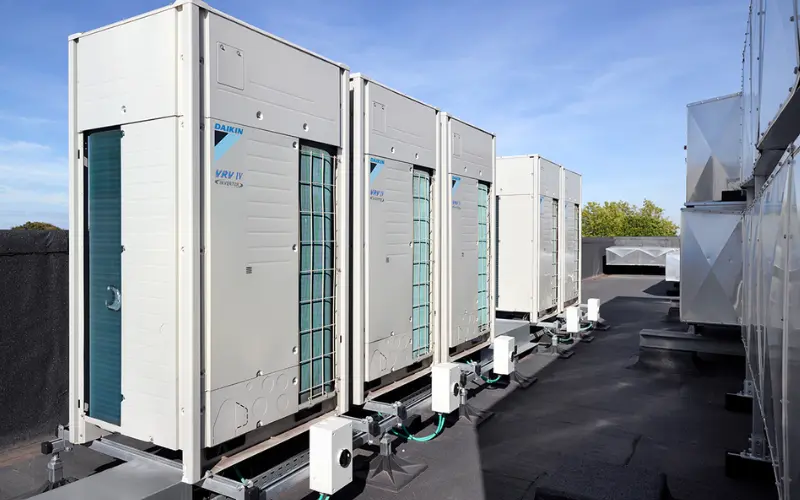
A VRV system addresses this issue by allowing multiple indoor units to connect to a single outdoor unit or modular outdoor-unit combination, significantly reducing the number of outdoor equipment locations required.
For example, an office with multiple work areas, meeting rooms, and function spaces can use numerous indoor units while consolidating the outdoor units within a designated technical area.
This not only saves space but also reduces equipment clutter on the façade, giving architects greater flexibility in maintaining a clean building exterior.
2.2 Inverter technology helps optimize energy use
Electricity costs should be evaluated across the entire HVAC system life cycle, particularly in hotels, offices, and buildings with long daily operating hours.
One of VRV’s key advantages is its ability to modulate compressor capacity according to actual cooling load. With inverter technology, compressor output can decrease as cooling demand falls instead of continuously operating at maximum capacity or repeatedly cycling on and off.
Consider an office where the main work areas operate throughout the day while meeting rooms are used only for a few hours. Cooling demand changes continuously, and VRV’s ability to respond to these load variations can help reduce unnecessary energy consumption.
For this reason, VRV energy savings should be understood as optimization based on actual operating conditions rather than as a fixed savings percentage applicable to every building.
For buildings with long-term operation, improved energy performance can become an important factor when evaluating the system’s total cost of ownership.
2.3 VRV enables independent zone control
Not every space within a building has the same operating requirements.
Hotels have both occupied and vacant rooms. Offices may have work areas operating continuously while meeting rooms require cooling only when in use. Villas also have spaces that are occupied at different times of the day.
With a VRV system, individual zones can be operated independently, with temperature settings, on/off control, and scheduling available depending on the control configuration.
KZone-level control can improve occupant comfort while helping avoid unnecessary cooling in unoccupied areas.
This is one of VRV‘s most valuable advantages for buildings with varying operating requirements.
2.4 RV systems support reliable operation
For offices, hotels, and other service-oriented buildings, HVAC reliability has a direct impact on day-to-day operations.
Modern VRV systems use increasingly precise electronic controls combined with compressors capable of flexible load modulation. Many product lines also provide fault logging or alerts, supporting more efficient inspection and troubleshooting by maintenance teams.
However, reliable operation depends on more than the equipment itself.
For a VRV system to maintain long-term performance, it requires accurate cooling-load calculations, appropriate equipment selection, properly installed refrigerant piping, correct pressure testing and vacuum evacuation procedures, and regular maintenance.
When these fundamentals are properly addressed, the system can maintain stable performance while reducing the risk of unplanned downtime.
2.5 Greater aesthetic and architectural flexibility
Interior design is increasingly important, particularly in villas, hotels, showrooms, and high-end offices. Air-conditioning equipment therefore needs to be integrated without compromising the overall architectural concept.
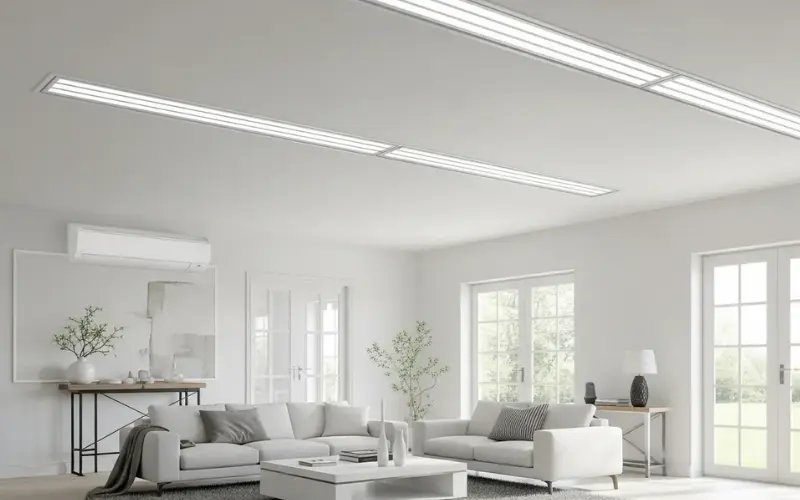
VRV systems offer a variety of indoor-unit options, including ceiling cassette, concealed ducted, wall-mounted, and ceiling-suspended units, depending on the manufacturer and system configuration.
In a high-end villa, for example, concealed ducted units combined with appropriately designed supply-air grilles can minimize visible HVAC equipment within the interior.
Externally, consolidating outdoor units within designated technical areas can also reduce equipment clutter on the building façade.
As a result, VRV is not only a cooling solution but can also give architects and property owners greater flexibility in preserving the building’s overall aesthetic.
2.6 VRV can integrate with BMS, IoT, and smart building management
Modern HVAC is increasingly moving beyond room-by-room cooling toward system management based on operational data and actual usage requirements.
With the appropriate configuration, a VRV system can connect to a central controller for equipment-status monitoring, operating schedules, user-access management, and fault alerts.
In larger buildings, VRV can also interface with a Building Management System (BMS) through a compatible gateway or communication protocol, allowing facility teams to manage HVAC operations centrally rather than checking individual zones separately.
Alongside BMS integration, IoT, smart-home, and smart-building technologies are expanding the capabilities of supported systems through remote control, equipment monitoring, and operational data analysis.
Going forward, HVAC operating data is expected to play an increasingly important role in identifying abnormal conditions, developing effective operating schedules, and optimizing building energy consumption.
2.7 Flexibility in installation, operation, and maintenance
Real-world projects rarely offer completely ideal installation conditions. Many buildings have multiple floors and rooms or limited technical space.
VRV’s refrigerant piping network and wide range of indoor-unit types give engineers greater flexibility in developing layouts suited to individual spaces.
This flexibility is particularly valuable in office retrofit projects where property owners need to minimize technical-space requirements or limit changes to the existing architecture.
Control systems and fault-diagnostic functions available on modern equipment can also support inspection, system management, and maintenance.
However, these advantages depend on proper VRV system planning from the outset, particularly in terms of refrigerant piping length, elevation differences, outdoor-unit placement, condensate drainage, and maintenance access.
3. Summary of 7 VRV system advantages
The seven key VRV advantages and their practical value to property owners can be summarized as follows::
|
Advantage |
Value to owners |
Buildings that benefit most |
|
Space savings |
Fewer outdoor-unit locations |
Offices, villas |
|
Inverter technology |
Load-based energy optimization |
Buildings with long operating hours |
|
Zone control |
Flexible operation |
Hotels, offices |
|
Reliable operation |
Supports life-cycle cost optimization |
Commercial buildings |
|
Aesthetics |
Better architectural integration |
Villas, showrooms |
|
BMS/IoT |
Centralized HVAC management |
Smart buildings |
|
Installation flexibility |
Optimized equipment layout |
Multi-story buildings |
4. Where is VRV technology headed?
VVRV technology continues to evolve alongside broader developments in the HVAC industry.
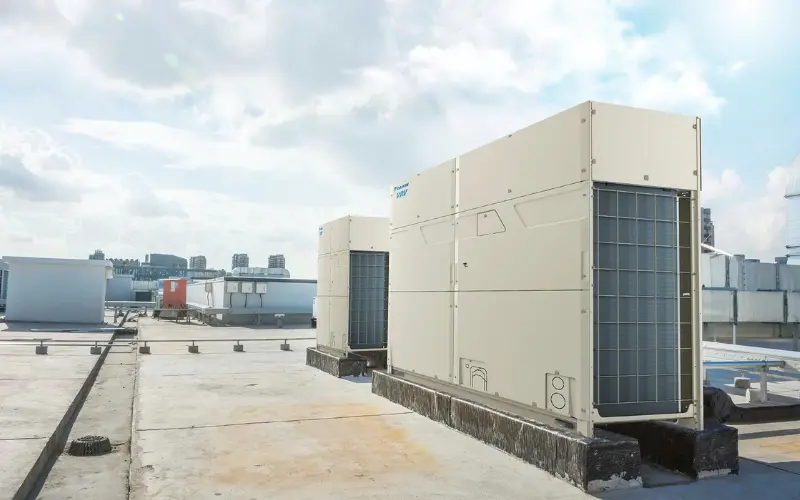
One key area is energy performance. Inverter compressors, load-control algorithms, and system management technologies are receiving greater attention as building owners seek to reduce electricity consumption under real operating conditions and meet increasingly important energy-efficiency and green-building objectives.
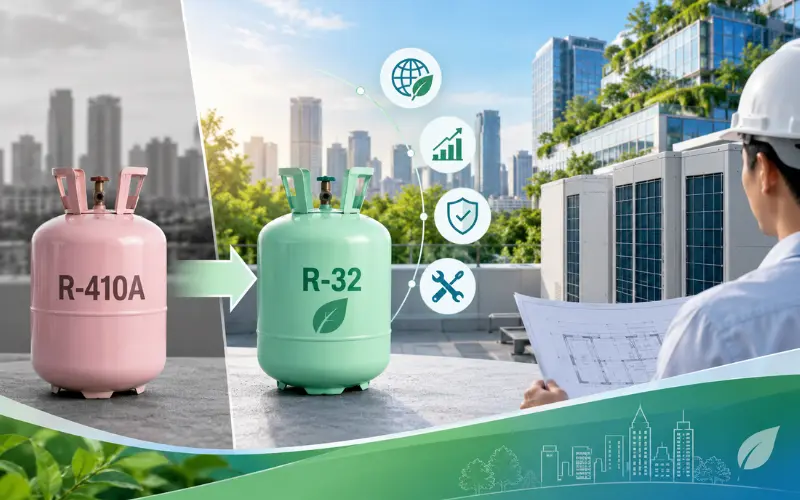
Another trend is the transition toward refrigerants with lower environmental impact, particularly lower Global Warming Potential (GWP). However, VRV systems do not all use the same refrigerant, so selection must be based on the specific equipment model, applicable safety requirements, and project conditions.
The continued development of BMS, IoT, and smart-building technologies is also transforming air conditioning from a standalone building service into an integrated part of the broader smart-building management ecosystem.
5. Is VRV the right choice for every building?
Not necessarily..
VRV is particularly worth considering for buildings with multiple rooms or zones, varying usage patterns, limited outdoor-unit space, high architectural requirements, or a need for centralized HVAC management.
For smaller buildings with only a few rooms and simple operating requirements, however, a VRV system may not always be the most economical option.
Property owners should therefore compare VRV with standalone split systems or chiller systems based on cooling load, project scale, architecture, initial investment, and long-term operating costs rather than equipment price alone.
6. Dong SaPa: VRV consulting and installation tailored to each project
The advantages of VRV can only be fully realized when the system is properly designed and installed in accordance with technical requirements.
6.1 An efficient VRV system starts with proper design
Before equipment is selected, the project should be surveyed and the cooling load calculated for each space. These results provide the engineering basis for sizing indoor and outdoor units and designing refrigerant piping, condensate drainage, electrical and control systems, and equipment locations.
Following installation, pressure testing, vacuum evacuation, test operation, system adjustment, and final acceptance also have a direct impact on system performance.
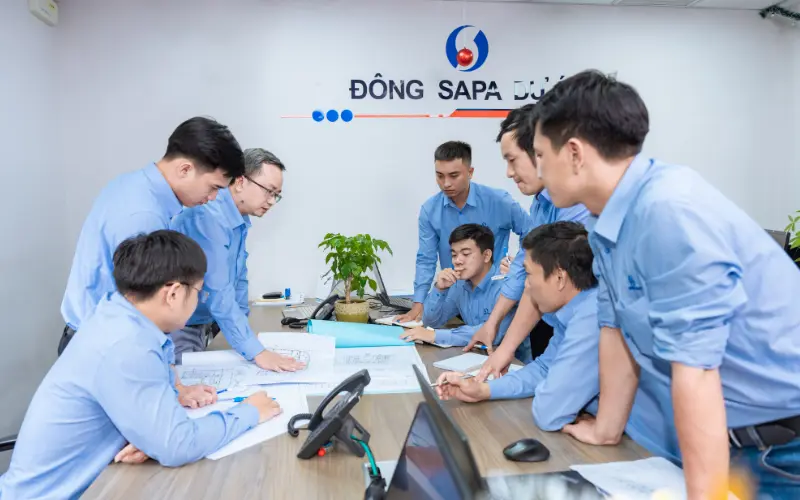
6.2 The value of an integrated HVAC solution
Dong SaPa provides VRV consulting, design, and installation services tailored to the actual conditions of each project. Rather than selecting equipment based solely on nominal capacity, an effective HVAC solution should consider cooling load, architecture, operating hours, system operation, maintainability, and investment budget as a whole.
A properly planned VRV solution from the design stage enables property owners to make better use of the technology’s inherent advantages throughout the system life cycle.
7. Considering these 7 advantages, is VRV worth the investment?
Overall, the seven key advantages of VRV include reduced outdoor-unit space requirements, load-based energy optimization, independent zone control, reliable operation, improved aesthetics, BMS/IoT integration, and greater flexibility in installation and maintenance..
However, the long-term value of a VRV system depends on more than the equipment brand or hardware itself. Cooling-load calculations, capacity selection, refrigerant piping design, and installation quality are critical factors in determining whether the system will perform efficiently and reliably over time.
If you are considering an air-conditioning solution for a villa, office, hotel, or commercial building, contact Dong SaPa for a site survey, cooling-load calculation, and VRV solution tailored to your project’s actual operating requirements.
EAST SAPA ENGINEERING CORPORATION
- Showroom: 456/72 Cao Thang (Extended), Hoa Hung Ward, Ho Chi Minh City.
- 24/7 Project Hotline: 0988 200 200 (Mr. Vinh)
- Email: quangvinh@dongsapa.com.vn
- Website: dongsapa.com.vn
Other news