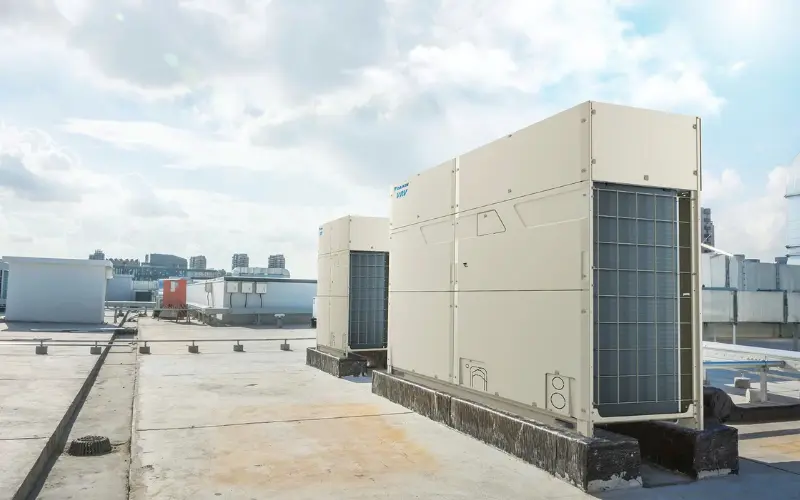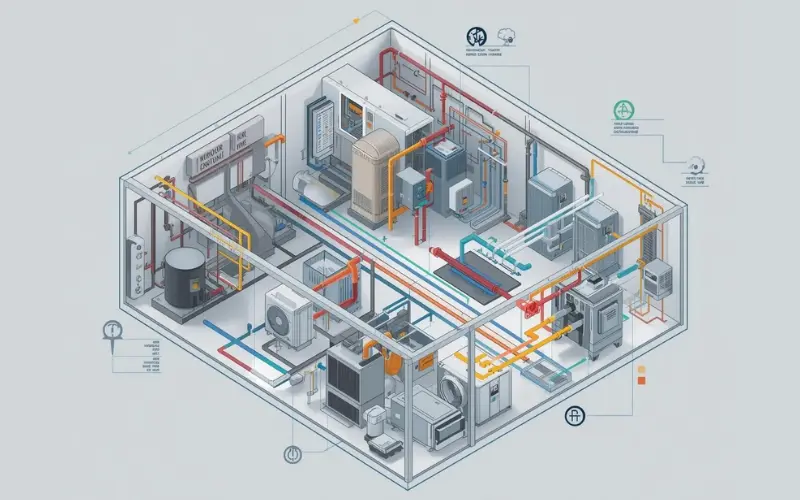

Is R-410A Being Phased Out? The Shift Toward R-32 and Next-Generation Refrigerants
The HVAC industry is entering a significant period of transition. While performance and energy efficiency remain key priorities, the environmental impact of refrigerants is increasingly shaping how manufacturers develop new equipment.
R-410A became the standard choice for many air-conditioning systems after the industry moved away from R-22. Now, as regulations push to reduce the use of high-GWP high-GWP HFCs (hydrofluorocarbons), the market is shifting toward R-32 and other next-generation refrigerants.
R-410A vs. R-32: What are the key differences? Is R-410A really on its way out, and what does this shift mean for anyone preparing to invest in an air-conditioning system?
1. Why Is the HVAC Industry Moving Toward Lower-GWP Refrigerants?
To understand the transition from R-410A to R-32, it helps to start with GWP — Global Warming Potential — a metric used to compare the climate impact of a gas relative to CO₂ over a specified period.
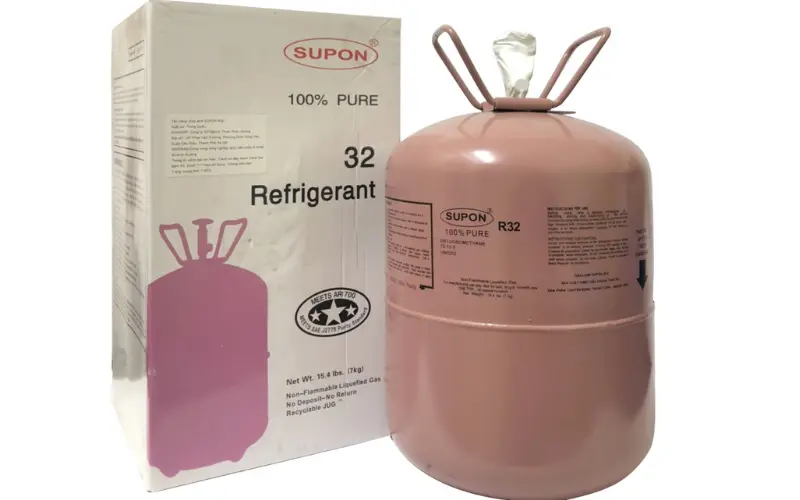
Under the GWP values used by the U.S. Environmental Protection Agency (EPA) for its Technology Transitions program, R-410A has a GWP of 2,088, compared with 675 for R-32 and 465 for R-454B. By this measure, R-32’s GWP is only about 32% of R-410A’s.
This difference is one of the main reasons lower-GWP refrigerants are receiving increasing attention across the HVAC industry.
In the United States, for example, the EPA has set a GWP limit of 700 for many categories of new residential and light-commercial air-conditioning equipment. VRF systems are also part of this transition, subject to the same GWP-700 limit and their own compliance timelines.
This shows that the refrigerant transition is no longer a distant issue — it is already influencing HVAC product development.
2. Is R-410A Really Being Phased Out?
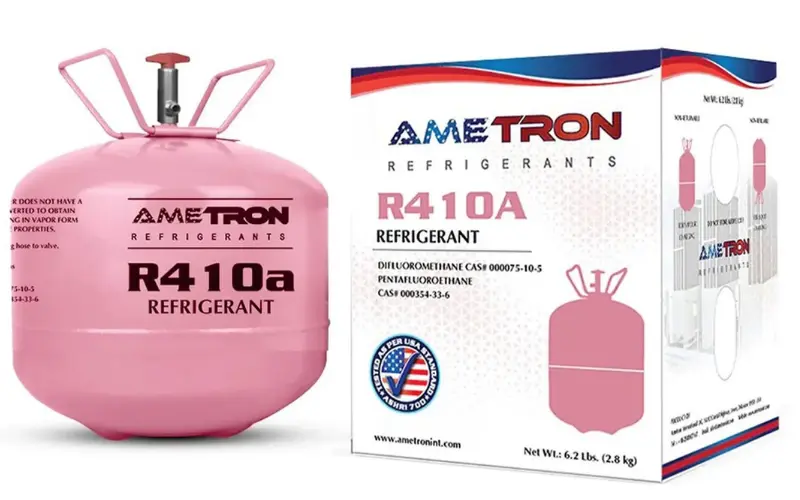
R-410A is a blend of R-32 and R-125. It has an ODP (Ozone Depletion Potential) of zero, meaning it does not deplete the ozone layer, and has been widely used across many air-conditioning product lines.
The main concern is its relatively high GWP. As countries and manufacturers work to reduce greenhouse gas emissions, lower-GWP refrigerants have become an increasingly important direction for product development.
However, when discussing R-410A and R-32, it is important not to assume that “R-410A has been banned” or that all existing R-410A systems will soon have to stop operating.
In practice, HFC-reduction timelines vary by country, equipment type, and application. Even within the United States, regulations include different transition milestones. For VRF systems, the EPA allows certain higher-GWP equipment manufactured or imported before January 1, 2026, to continue being installed through January 1, 2027. Certain projects that meet specific building-permit conditions may also qualify for different transition deadlines.
A more accurate way to understand the transition is that R-410A is being gradually phased down in new equipment in certain markets, rather than being eliminated altogether.
3. R-410A vs. R-32: What Are the Key Differences?
This is an important consideration for end users, M&E engineers, and project owners evaluating a new air-conditioning system.
The main differences between R-410A and R-32 can be summarized as follows:
|
Criteria |
R-410A |
R-32 |
|
Composition |
Blend of R-32/R-125 |
Single-component refrigerant |
|
GWP (per EPA) |
2.088 |
675 |
|
ODP |
0 |
0 |
|
Safety classification |
A1 (Low toxicity, no flame propagation) |
A2L (Low toxicity, mildly flammable) |
|
Flammability class |
No flame propagation |
Mildly flammable |
|
Climate impact by GWP |
Higher |
Significantly lower |
|
Trend |
Facing gradual phase-down in new equipment in some markets |
Adopted as a lower-GWP option |
|
Equipment requirements |
Designed for R-410A |
Must be compatible with R-32 and its associated safety requirements |
The EPA currently classifies HFC-32 (the chemical designation for R-32, part of the HFC family) as A2L and permits its use in certain residential and light-commercial air-conditioning applications, subject to applicable conditions of use.
As the comparison shows, R-32’s most apparent advantage is its significantly lower GWP. However, it would be inaccurate to conclude from this alone that R-32 is “better than R-410A in every respect.”
R-410A and R-32 have different properties and safety requirements. The appropriate choice depends on equipment design, site conditions, and applicable technical standards.
4. Why Is R-32 Gaining Traction in Next-Generation Air Conditioning?
One of the main reasons is its lower GWP compared with R-410A. As manufacturers adapt to increasingly stringent environmental requirements, this represents an important advantage.
R-32 is also a single-component refrigerant, unlike R-410A, which is a blend. Even so, comparing R-410A and R-32 should not be based on GWP or refrigerant type alone.
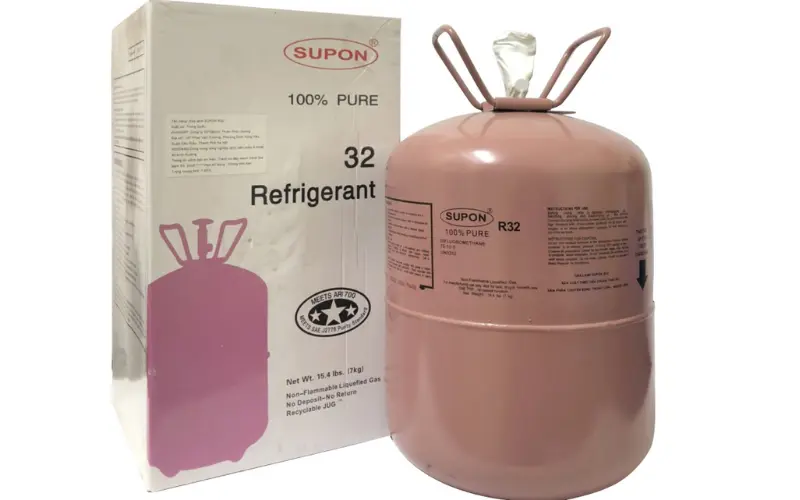
R-32 is classified as A2L, meaning low toxicity and mild flammability under the applicable safety classification. Its use therefore introduces specific requirements for system design, refrigerant charge limits, installation practices, tools, maintenance, and technician training.
This trend is also becoming increasingly evident in the VRF market. In September 2026, ACHR News (Air Conditioning, Heating & Refrigeration News, a U.S. HVACR trade publication) reported that the transition to A2L refrigerants is reshaping both the design and operation of VRF systems while introducing new requirements for HVAC professionals.
5. Beyond R-32: R-454B and the Next Wave of Low-GWP Refrigerants
Framing today’s transition purely as R-410A versus R-32 misses an important part of the picture.
R-454B is a notable example. It is a blended refrigerant in the A2L category. According to the EPA’s reference values, R-454B has a GWP of 465 — lower than R-32 at 675 and significantly lower than R-410A at 2,088.
The EPA has also approved R-454B for certain new air-conditioning and heat pump applications, subject to specific conditions of use.
This shows that the HVAC industry is not simply moving from one refrigerant to a single replacement. The broader trend is toward lower-GWP solutions that balance performance, safety, practical application, and environmental impact
6. How Does the R-410A to R-32 Transition Affect VRV/VRF Systems?
For central VRV/VRF systems, a refrigerant transition involves much more than simply changing the refrigerant used by the equipment.
When an A2L refrigerant is used, system design must consider multiple factors together, including equipment model, refrigerant charge, room volume, piping layout, leak-detection requirements or risk-mitigation measures where required, as well as installation and maintenance procedures.
That is why the choice between R-410A and R-32 should be addressed during the system design stage rather than treated as a secondary equipment specification.
This consideration is becoming increasingly important as next-generation VRF systems combine lower-GWP refrigerants with smart controls, predictive diagnostics, and other technologies designed to improve operating performance.
For project owners evaluating a VRV air-conditioning system, refrigerant selection should be assessed alongside system capacity, energy efficiency, and long-term operating performance.
7. Do Existing R-410A Systems Need to Switch to R-32 Right Away?
R-410A should not be removed and replaced with R-32 in a system originally designed for R-410A.
This is one of the most important points to understand about R-410A and R-32: the two refrigerants are not freely interchangeable. R-32 falls under the A2L classification, and equipment using it must meet the corresponding design and safety requirements.
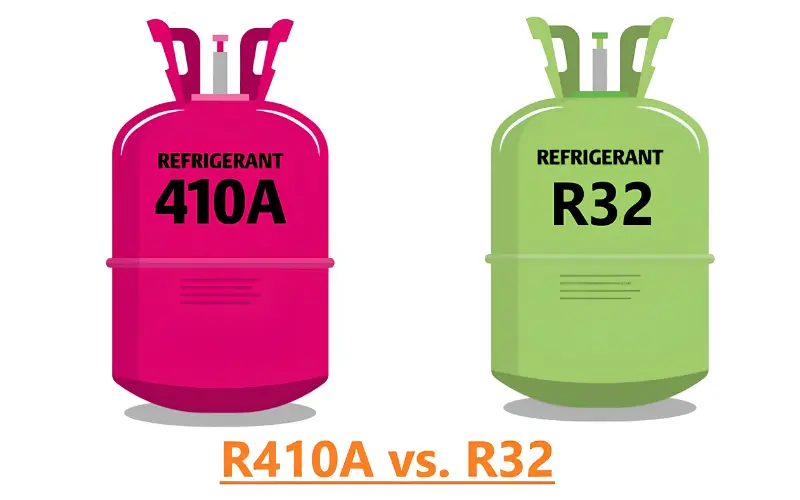
For existing systems using R-410A, operation and maintenance should continue in accordance with the manufacturer’s requirements, with appropriate leak control and use of the specified refrigerant.
R-410A also remains available for servicing existing systems. In August 2026, ACHR News reported that current supply remained relatively ample, although refrigerant recovery and reclamation are expected to become increasingly important over the long term.
8. How Should Project Owners Select an Air-Conditioning System Amid These Changes?
For a new project, the question should not simply be “R-410A or R-32?”
An air-conditioning system has a service life of many years, so the investment decision should consider several factors together:
- Energy efficiency and performance under actual load conditions.
- Refrigerant type, GWP, and the manufacturer’s technology roadmap.
- Applicable safety standards and suitability for the building.
- Availability of parts, refrigerant, and maintenance services.
- The lifecycle cost of the VRV system, rather than the initial equipment cost alone.
For hotels, offices, upscale villas, and commercial buildings using VRV/VRF systems, technology selection should be carried out in consultation with an experienced HVAC contractor or consultant capable of evaluating equipment selection, piping design, and actual operating conditions.
9. R-410A vs. R-32: Evaluating Refrigerant Choice Across the System Lifecycle
The shift from R-410A to R-32 reflects a broader trend across the HVAC industry: moving from high-GWP refrigerants toward solutions with lower environmental impact. R-32 has emerged as an important lower-GWP option, while the adoption of R-454B and other A2L refrigerants shows that the transition is continuing to evolve.
For new projects, refrigerant selection should therefore be considered from the consulting and design stage, alongside system performance, safety, investment cost, and long-term maintainability.
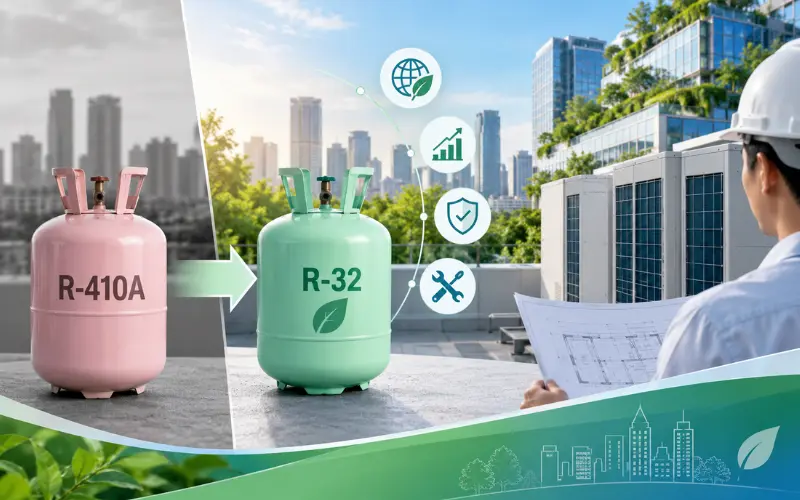
Dong SaPa provides consulting, design, and installation services for VRV/VRF air-conditioning systems across a wide range of projects. Selecting the right technology from the outset helps ensure the system can meet current operating requirements while remaining better aligned with future developments in the HVAC industry.
10. Frequently Asked Questions About R-410A and R-32
10.1. Is R-410A Banned?
R-410A has not been banned outright worldwide. Some markets are gradually restricting high-GWP HFC refrigerants for certain equipment and applications, each following its own specific timeline.
10.2. Which Is Better: R-410A or R-32?
R-32 has a significantly lower GWP, but GWP alone cannot determine which refrigerant is “better” for every project. Equipment design, performance, safety, application, and maintainability all need to be considered.
10.3. Can R-410A Be Replaced With R-32?
R-410A should not be replaced with R-32 in equipment that was not designed or approved for R-32. The two refrigerants have different properties and safety requirements.
10.4. Is R-32 Flammable?
R-32 falls under the A2L classification, meaning low toxicity and mild flammability. Systems using R-32 therefore need to be designed, installed, and maintained in accordance with the applicable safety requirements.
10.5. What Comes After R-410A?
R-32, R-454B, and several other low-GWP refrigerants are already being used depending on equipment type and market. No single refrigerant should be treated as a one-size-fits-all replacement for every HVAC system.
EAST SAPA ENGINEERING CORPORATION
- Showroom: 456/72 Cao Thang (Extended), Hoa Hung Ward, Ho Chi Minh City.
- 24/7 Project Hotline: 0988 200 200 (Mr. Vinh)
- Email: quangvinh@dongsapa.com.vn
- Website: dongsapa.com.vn
Other news