
Choosing a Turnkey HVAC Contractor: From Design to Operation
A complete HVAC project involves much more than equipment installation. Property owners must also manage site surveys, cooling-load calculations, system design, equipment selection, air-conditioning and ventilation installation, electrical and control work, testing, commissioning, acceptance, and maintenance. When these scopes are handled by multiple contractors, coordinating responsibilities, schedules, and costs can become increasingly complex.
Choosing a turnkey HVAC contractor allows property owners to manage the entire process through a single point of contact, from initial consulting through system operation. This can simplify communication and coordination throughout the project. Dong SaPa provides integrated HVAC solutions designed to align system design, equipment selection, and installation across a wide range of building types.
1. What does a turnkey HVAC contractor cover?
A turnkey HVAC contractor can support a project throughout the delivery process rather than providing equipment or installation as separate services
1.1. Site survey, consulting, and HVAC system design
Before installation begins, the contractor needs to assess existing site conditions and define space functions as well as temperature, humidity, and ventilation requirements. Based on this information, the engineering team can calculate cooling loads, select an appropriate solution, and design the air-conditioning and ventilation systems.
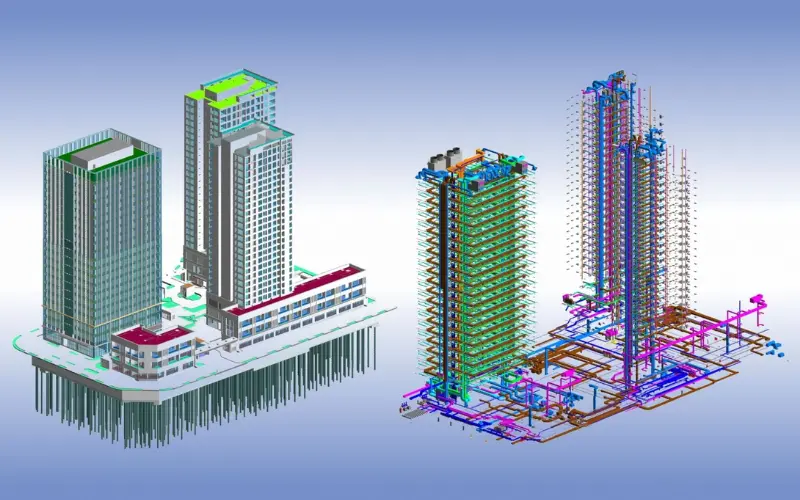
HVAC design consulting may also include drawing development, quantity takeoff, and balancing initial capital expenditure (CAPEX) against long-term operating expenditure (OPEX).
1.2. HVAC equipment supply
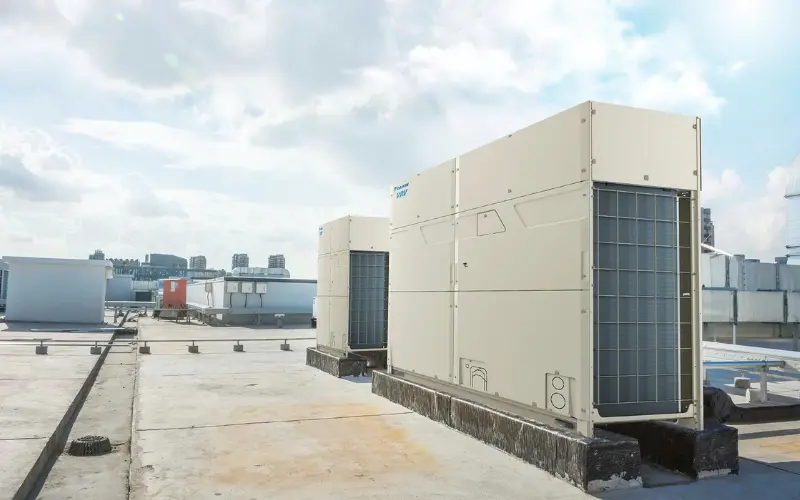
Depending on project scale and operating requirements, the contractor may recommend VRV/VRF, chiller systems, AHUs, FCUs, or standalone split systems. A complete HVAC system may also include fans, ductwork, air terminals, and a wide range of materials and fittings.
Equipment should be selected based on cooling load, intended use, and actual operating conditions rather than simply choosing the option with the lowest initial purchase price.
1.3. Air-conditioning and ventilation installation
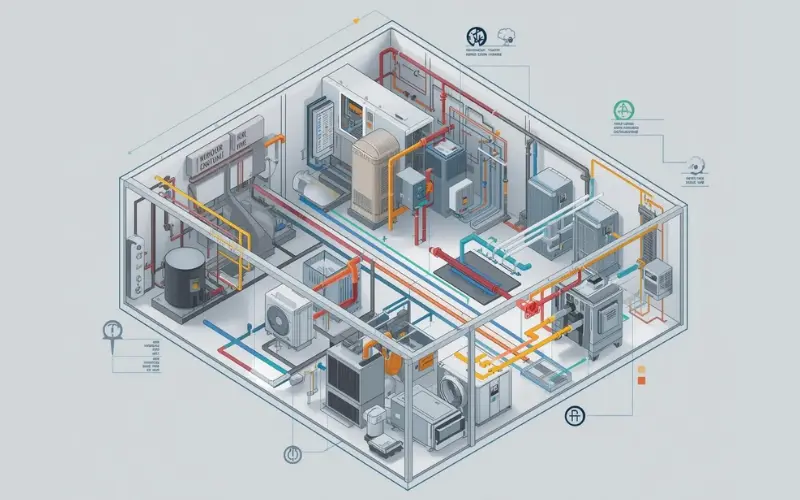
HVAC installation typically includes equipment installation, piping, ductwork and fittings, fresh-air supply and exhaust systems, electrical and control work, insulation, and related technical items.
Proper coordination among these components has a direct impact on system efficiency and reliability once the HVAC system is placed into operation.
1.4. Testing, commissioning, and HVAC maintenance
After installation is completed, the system must be inspected, tested, commissioned, and placed into operation so that its operating parameters can be evaluated. The contractor then carries out the HVAC acceptance process, hands over technical documentation and operating instructions, and establishes a regular HVAC maintenance plan.
2. Why choose a turnkey HVAC contractor instead of separate vendors?
The value of a turnkey approach goes beyond convenience. More importantly, having a single point of responsibility can help reduce coordination risks between design, equipment supply, and installation.
2.1. Consistency from design through installation
When the same contractor is involved from site survey and design through installation, the technical approach can remain more consistent throughout the project. This helps reduce the risk of design documents that do not reflect actual site conditions or require repeated adjustments during installation.

2.2. Better cost control and fewer unplanned costs
A turnkey HVAC contractor can evaluate equipment, materials, labor, and installation methods together when developing the project budget. This also gives property owners a clearer basis for reviewing total project cost instead of consolidating separate quotations from multiple suppliers.
More importantly, cost optimization should consider not only initial investment but also energy consumption and long-term operating costs.
2.3. More effective schedule control
Rather than coordinating multiple suppliers independently, the property owner can work through one primary contractor. That contractor is responsible for coordinating the HVAC scope with related MEP systems in line with the overall project schedule.
2.4. Clearer warranty and issue resolution
When system issues arise, a turnkey approach provides a clearer point of responsibility and reduces potential disputes among the designer, equipment supplier, and installation contractor.
3. A professional turnkey HVAC delivery process
A turnkey HVAC design-and-build process can typically be organized into six key steps:
3.1. Step 1 – Site survey and requirements review
The contractor reviews floor area, space functions, site conditions, and operating requirements. Temperature, humidity, ventilation, load requirements, and budget should also be established at the beginning of the project.
3.2. Step 2 – HVAC solution development and design
Based on survey data, engineers calculate the cooling load and select an appropriate HVAC technology. Depending on the project, the solution may use VRV/VRF, a chiller system, AHUs/FCUs, or another air-conditioning configuration.
The objective is not to specify the largest system available, but to select a solution that meets actual operating requirements while providing a reasonable balance between performance and investment.
3.3. Step 3 – Cost estimating and quotation
Based on the design, the contractor prepares quantity takeoffs for equipment, materials, labor, and installation work. The HVAC quotation should also clearly define the scope of work and expected schedule so the property owner can review and control the project more effectively.

3.4. Step 4 – Equipment supply and installation
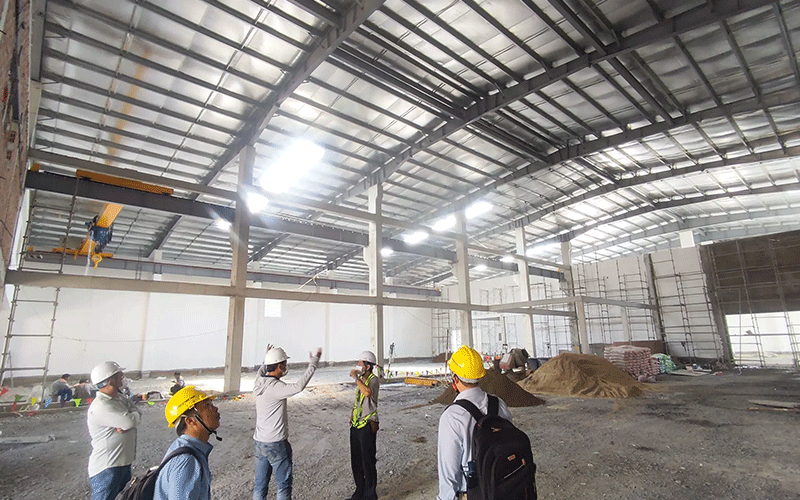
Equipment and materials are mobilized according to the project plan. HVAC installation is carried out in accordance with approved drawings and coordinated with architectural, structural, electrical, plumbing, and other technical systems to minimize conflicts.
3.5. Step 5 – Inspection, Testing, and Commissioning
After installation, the system is inspected and tested. Depending on project requirements, commissioning may include evaluation of temperature, airflow rate, noise level, operating performance, and other relevant technical parameters.
3.6. Step 6 – Handover, warranty, and maintenance
Finally, the contractor hands over the system, technical documentation, and operating instructions. Establishing a regular maintenance schedule can help identify abnormalities early and support reliable equipment operation over time.
4. What determines turnkey HVAC installation cost?
There is no single HVAC cost-per-square-meter figure that can be applied accurately to every project. Turnkey HVAC installation cost should be determined based on system design, cooling load, equipment type, project scale, and actual site conditions.
|
Factor |
Cost Impact |
|
Building scale |
Floor area and number of conditioned zones |
|
Building type |
Factories, offices, hotels, villas, and other building types have different requirements |
|
CHVAC technology |
VRV/VRF, chiller, AHU/FCU, and other systems |
|
Equipment brand |
Affects initial cost, technical specifications, and equipment service life |
|
Ventilation system |
Fresh-air supply, exhaust, fans, ductwork, and fittings |
|
Site conditions |
Building height, technical space, and schedule requirements |
|
Technical requirements |
Temperature, humidity, cleanliness, noise level, and project-specific requirements |
When requesting an HVAC installation quotation, property owners should provide available drawings and technical requirements. For projects without complete documentation, an on-site survey can help the contractor prepare more accurate quantities and cost estimates.
5. Key criteria for choosing a qualified HVAC contractor
A contractor should not be selected on price alone. Property owners can evaluate an HVAC contractor based on the following five criteria:
5.1. Design and technical consulting capability
A capable contractor should understand more than equipment supply. It should be able to evaluate cooling load, space functions, system requirements, and long-term operating performance as part of an integrated solution.
5.2. A qualified technical team
The capability of engineers and installation personnel has a significant impact on how effectively design documents are implemented and how site issues are addressed during construction.
5.3. Experience with similar projects
Different project types require different technical capabilities. Experience with villa-scale systems does not automatically demonstrate the ability to deliver a large-scale HVAC system for a factory or commercial building.
5.4. Transparent quotations and scope of work
Property owners should review equipment models and origin, material quantities, installation scope, project schedule, and the terms governing variations or additional costs.
5.5. Warranty and post-handover maintenance
HVAC systems are long-term building assets. A contractor’s ability to provide technical support, warranty service, and maintenance after handover should therefore be considered as part of the selection process.
6. Why choose Dong SaPa as Your HVAC contractor?
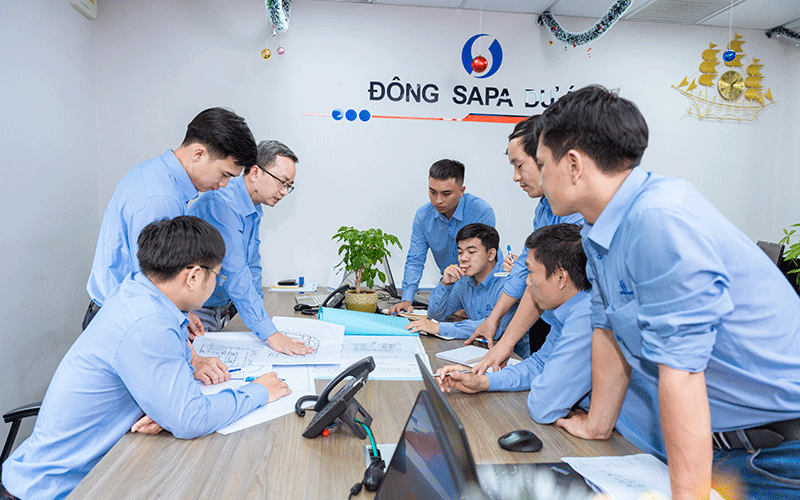
When selecting a turnkey HVAC contractor, property owners need more than an equipment supplier. They need a partner capable of connecting the different stages of the project into one coordinated delivery process.
6.1. An integrated HVAC solution through a single point of contact
Dong SaPa delivers HVAC services through an integrated process: Consulting → Design → Equipment Supply → Installation → Commissioning and Acceptance → Maintenance. This approach gives clients a clearer framework for managing technical decisions, schedule, and responsibility throughout the project.
6.2. Solutions for a wide range of building types
HVAC solutions should be developed according to the specific requirements of factories, industrial facilities, commercial buildings, offices, hotels, restaurants, villas, and projects with specialized operating needs.
Rather than applying the same solution to every project, early site assessment and appropriate technology selection provide a better basis for balancing operational performance with the available investment budget.
6.3. Focus on post-handover support
The value of an HVAC system does not end at project acceptance. Warranty service, maintenance, and ongoing technical support also play an important role in maintaining reliable system operation over time.
7. FAQs about turnkey HVAC installation
7.1. How long does a turnkey HVAC installation take?
HVAC installation time depends on project scale, system type, site conditions, the overall construction schedule, and equipment lead times. The contractor therefore needs to assess the project and develop a detailed plan before committing to a schedule.
7.2. Does a turnkey HVAC contractor include design?
A turnkey scope can typically include site survey, consulting, design, quantity takeoff, equipment supply, installation, testing, and commissioning. However, the exact scope should always be clearly defined in the project contract.
7.3. How long is an HVAC system under warranty?
It is important to distinguish between the manufacturer’s equipment warranty and the contractor’s installation warranty. The applicable warranty period depends on the equipment type, manufacturer policy, and contractual terms.
7.4. How can I get an accurate HVAC installation quote?
Clients should provide drawings, floor area, space functions, operating requirements, and information about the building type. For more complex projects, an on-site survey before quotation can help produce an estimate that more closely reflects actual quantities and site conditions.
An effective HVAC system depends on more than suitable equipment. System design, technology selection, installation quality, and post-handover maintenance all contribute to long-term performance. Choosing a capable turnkey HVAC contractor that can support the project from design through operation is therefore an important step in controlling quality, schedule, and budget.
Planning an HVAC project for a factory, office, hotel, restaurant, or villa? Contact Dong SaPa for a site survey, HVAC solution consulting, and a cost estimate tailored to your project requirements.
EAST SAPA ENGINEERING CORPORATION
- Showroom: 456/72 Cao Thang (Extended), Hoa Hung Ward, Ho Chi Minh City.
- 24/7 Project Hotline: 0988 200 200 (Mr. Vinh)
- Email: quangvinh@dongsapa.com.vn
- Website: dongsapa.com.vn
Other news