
When Should You Use a VRV System? 6 Scenarios to Consider Before Investing
When planning a new building, selecting the right air-conditioning system is an important investment decision. An unsuitable solution can increase initial cost and energy consumption while also affecting the building’s architectural appearance. Among the available options, VRV systems are widely considered for villas, hotels, and office buildings because of their operational flexibility, energy efficiency, and reduced outdoor-unit requirements. However, VRV is not suitable for every project. So when should a VRV system be considered to achieve the right balance between long-term performance and cost? This article from Dong SaPa outlines the key factors property owners should evaluate before making an investment decision.
1. What is a VRV Air-conditioning system?
1.1. What is VRV?
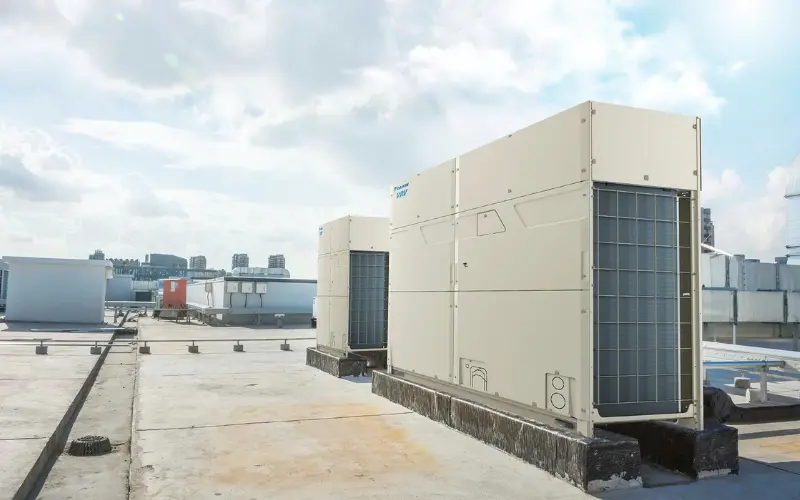
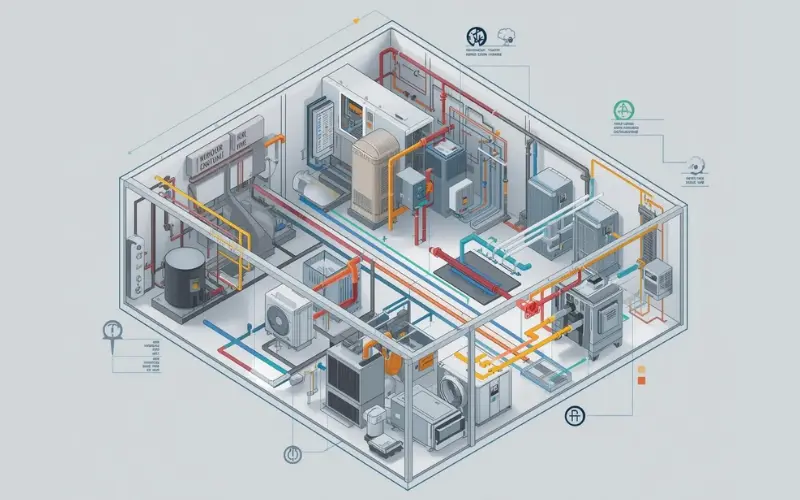
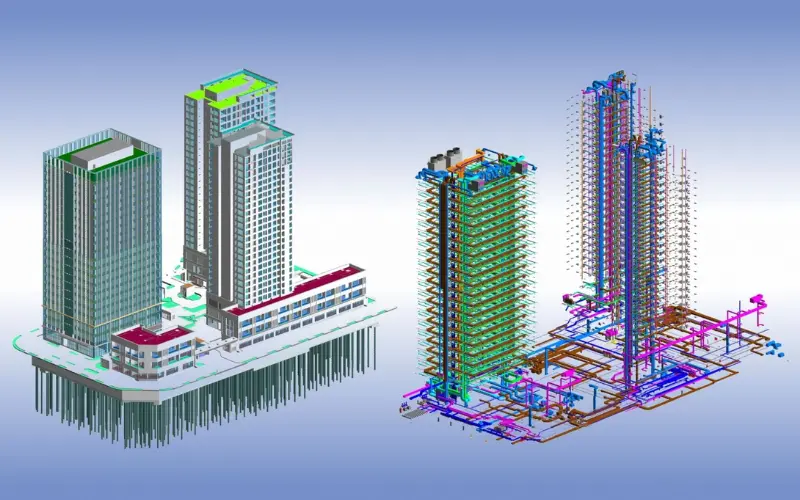
VRV stands for Variable Refrigerant Volume, a central air-conditioning system that adjusts refrigerant flow according to the actual cooling demand of individual zones. Unlike conventional standalone split systems, one VRV outdoor-unit system can connect to multiple indoor units while allowing independent temperature control in different rooms or zones.
With inverter technology, the system modulates compressor capacity instead of operating through repeated on/off cycles. Capacity rises or falls according to actual cooling demand, helping reduce unnecessary energy consumption, maintain more stable temperatures, and reduce equipment wear.
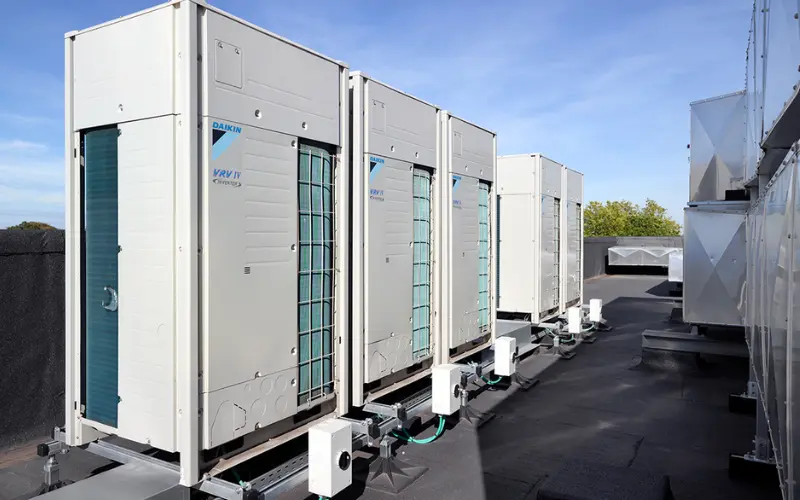
VRV systems are commonly used in a wide range of building types, including:
- Office buildings.
- Hotels and resorts.
- Villas and penthouses.
- Showrooms and shopping malls.
- Restaurants, spas, and other high-end service.
1.2. How does a VRV system work?
A key feature of VRV is its ability to modulate refrigerant flow according to actual cooling demand.
When only a few rooms are in use, the outdoor unit can reduce output instead of operating at maximum capacity. When cooling demand increases across multiple zones, the system raises capacity accordingly to maintain the required temperature.
This operating principle can provide several benefits:
- Lower energy consumption.
- Reduced compressor wear.
- More stable and comfortable indoor temperatures.
- Quieter operation.
- Longer system service life.
This is one reason VRV is often considered more suitable than conventional on/off systems for buildings with long operating hours and continuously changing cooling loads.
1.3. Key advantages of VRV systems
VRV has become increasingly popular because it offers a strong balance between operational efficiency and system flexibility.
Key advantages include:
- Energy optimization through inverter technology and load-based capacity control.
- Reduced installation space and fewer outdoor units.
- Independent room or zone control for different operating requirements
- Quiet operation with reduced noise.
- Greater flexibility for future expansion or renovation.
- Better architectural integration, particularly for buildings with high aesthetic requirements.
These advantages are most effective when VRV is applied to the right type of project. The following six scenarios help determine when a VRV system is worth considering?
2. When should you use a VRV system? 6 key scenarios
2.1. Buildings with multiple rooms requiring independent temperature control
This is one of the most common applications and one of VRV’s strongest advantages.
In practice, different spaces within the same building often have different cooling requirements. A crowded meeting room may require more cooling than a typical work area; an occupied hotel room has different needs from a vacant room; and bedrooms in a villa may not need to operate for the same hours as the living area.

With standalone split systems, individual rooms generally require separate units, which can make system management more complex and increase energy use when multiple units operate at the same time.
A VRV system allows:
- Independent temperature control for each room or zone.
- Cooling capacity to be directed toward zones that are actually in use.
- Centralized monitoring and control for facility management.
This makes VRV particularly suitable for:
- Offices with multiple departments.
- Hotels and resorts.
- Multi-story villas.
- Large townhouses.
- Spa, showroom and training centers.
Independent zone control can improve occupant comfort while also helping reduce unnecessary operating costs over the building life cycle.
2.2. Projects where space efficiency and aesthetics matter
For high-end buildings, architectural appearance is often an important design consideration. A façade can be visually compromised when numerous outdoor condensing units are installed across balconies or rooftops.
This is one reason many property owners consider VRV systems.
Consider a villa with 10 bedrooms and several shared living areas. With standalone split systems, the building could require 10 to 15 outdoor units distributed across different locations.
With VRV, the outdoor units can instead be consolidated within designated technical areas, reducing the number of installation locations.
This can provide several advantages:
- Helps preserve the architectural appearance of the façade.
- Frees up balcony and rooftop space.
- Reduces noise near occupied areas.
- Simplifies maintenance and equipment management.
This advantage is especially relevant to:
- High-end villas.
- Penthouses.
- Hotels.
- Grade A offices.
- Showrooms and shopping malls.
As modern architecture increasingly emphasizes clean and coordinated design, VRV can support not only cooling requirements but also the building’s overall architectural aesthetic
2.3. Buildings with long-term energy-efficiency priorities
The initial cost of a VRV system is typically higher than that of standalone split systems, which leads many property owners to consider whether the additional investment is justified.
The answer depends largely on the building’s operating hours and usage patterns.
For buildings that operate frequently, such as offices, hotels, restaurants, or year-round residences, energy consumption can become one of the largest costs over the HVAC system’s operating life.

With inverter technology and load-based capacity control, VRV systems can reduce compressor output when cooling demand decreases instead of maintaining maximum capacity unnecessarily.
Potential long-term benefits include:
- Lower electricity consumption.
- Reduced compressor wear.
- Longer equipment service life.
- Lower maintenance and repair costs.
VRV may therefore involve a higher initial investment but offer lower operating costs in buildings with long operating hours and varying cooling requirements across multiple zones.
For this reason, property owners should evaluate Total Cost of Ownership (TCO) rather than focusing only on purchase price. For many mid-size and large buildings, VRV can provide stronger long-term economic performance when both investment and operating costs are considered.
2.4. Buildings that may expand or change function in the future
Not every building retains the same layout or function throughout its operating life. An office may add more work areas, a hotel may renovate guest rooms, or a training center may divide or combine functional spaces as requirements change.
With standalone split systems, such renovations may require additional outdoor units as well as modifications to refrigerant piping, electrical supply, and condensate drainage, increasing both cost and disruption.
VRV systems offer greater flexibility, allowing:
- Indoor units to be added or changed within the system’s design limits.
- Greater flexibility when spaces are divided or combined.
- Reduced need for complete system replacement.
- Potentially lower future renovation costs.
This can be particularly valuable for buildings expected to change over time, including:
- Leased office space.
- Hotels.
- Restaurants.
- Training centers.
- Retail and showroom chains.
If future changes in space use are already anticipated, VRV can provide greater long-term flexibility than conventional standalone air-conditioning systems
2.5. Projects requiring centralized and smart HVAC management
Smart building management is becoming increasingly common. In addition to occupant comfort, property owners are placing greater emphasis on controlling operating costs and energy consumption.
This is an area where VRV systems can offer significant advantages.
Instead of monitoring individual units separately, facility managers can oversee the system through centralized controls or integrate it with a Building Management System (BMS).
Depending on the system configuration, available functions may include:
- Controlling multiple indoor units from a single interface.
- Scheduling operation by zone or time period.
- Monitoring energy consumption by zone.
- Assigning operating permissions to departments or authorized users.
- Providing fault alerts to support maintenance activities.
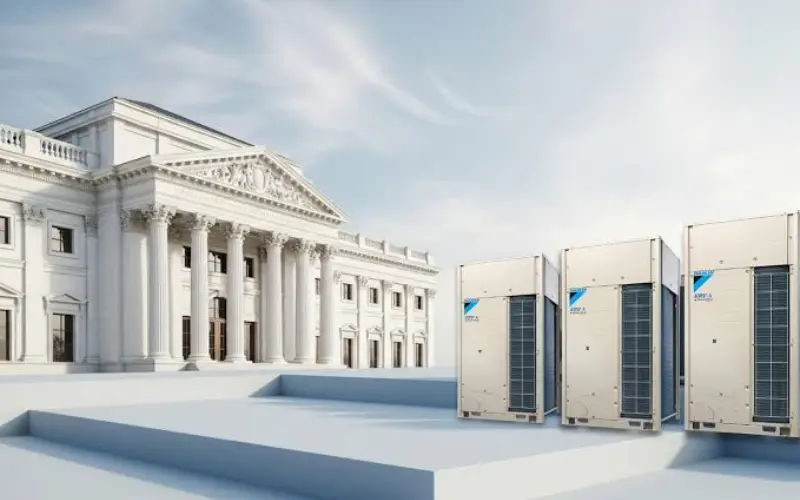
For larger buildings, centralized control can simplify facility management and support more efficient energy use.
VRV is particularly suitable for:
- Office buildings.
- Hotels.
- Shopping malls.
- Hospitals.
- Multi-site retail and office operations.
2.6. Mid-size to large buildings that do not require a chiller system
Many property owners consider both VRV and chiller systems when evaluating HVAC options.
Chiller systems can be highly effective for projects with very large cooling loads, such as airports, major hospitals, factories, or large shopping centers. However, not every building requires a chilled-water system.
For a mid-size building with multiple functional spaces but a cooling load that does not justify a chiller system, VRV may provide a more appropriate balance of capacity, flexibility, and investment.
Typical examples include:
- Office buildings.
- 3- to 5-star hotels.
- Schools.
- Mid-size hospitals.
- Small shopping centers.
- High-end villas.
For these project types, VRV can offer several advantages:
- Lower initial investment than a chiller system.
- Faster installation.
- No complex chilled-water piping network.
- Independent zone control.
- Flexible and energy-efficient operation.
VRV is therefore particularly well suited to mid-size and large buildings that need to balance initial investment, operating flexibility, and long-term cost.
3. VRV vs. standalone split systems vs. chillers: a quick comparison?
|
Criteria |
Standalone Split |
VRV |
Chiller |
|
Small buildings |
⭐⭐⭐⭐⭐ |
⭐⭐ |
⭐ |
|
Large villas |
⭐⭐ |
⭐⭐⭐⭐⭐ |
⭐⭐ |
|
Offices |
⭐⭐ |
⭐⭐⭐⭐⭐ |
⭐⭐⭐ |
|
Hotels |
⭐⭐ |
⭐⭐⭐⭐⭐ |
⭐⭐⭐⭐ |
|
Very large factories |
⭐ |
⭐⭐⭐ |
⭐⭐⭐⭐⭐ |
|
Điều khiển từng phòng |
Yes |
Excellent |
Depends on design |
|
Room-by-room control |
Low |
Moderate to High |
High |
|
Upfront cost |
Moderate |
Low |
Very low at large cooling loads |
The comparison shows that each system has its own appropriate application range:
- Standalone split systems are generally suitable for homes and smaller buildings with relatively few rooms.
- VRV is well suited to mid-size and large buildings with multiple functional spaces, architectural requirements, energy-efficiency priorities, and a need for flexible control.
- Chiller systems are most effective in projects with very large cooling loads, centralized operation, and long operating hours.
Rather than comparing initial cost alone, property owners should consider building scale, actual operating requirements, and future development plans when selecting an HVAC solution.
4. Key considerations when selecting and installing a VRV system
4.1. Calculate cooling capacity correctly from the start
One common mistake is selecting system capacity based on rule-of-thumb assumptions or floor area alone.
Actual cooling load depends on several factors, including:
- Solar exposure and orientation.
- Ceiling height.
- Occupancy density.
- Heat-generating equipment.
- Building-envelope materials.
Accurate cooling-load calculations provide a better basis for system sizing, helping support reliable operation, energy efficiency, and equipment service life.
4.2. Design refrigerant piping to proper technical standards
VRV system performance depends not only on equipment quality but also on proper system design and installation.

Key factors include:
- Refrigerant piping length.
- Elevation differences between indoor and outdoor units.
- Pipe insulation.
- Condensate drainage.
- Outdoor-unit placement with adequate airflow and clearance.
Even a relatively small design error can reduce system efficiency, increase energy consumption, or affect long-term equipment performance.
4.3. Choose an established HVAC brand
The market includes a number of established VRV/VRF manufacturers, such as:
- Daikin.
- Mitsubishi Electric.
- Samsung
- Toshiba.
- Panasonic.
Each manufacturer offers different strengths in technology, efficiency, controls, and system configuration. Equipment selection should therefore be based on the project’s actual technical and operating requirements rather than price alone.
4.4. Work with an experienced HVAC design and installation contractor
A VRV system can only deliver its intended performance when it is properly surveyed, designed, and installed.
As an experienced HVAC contractor with more than 23 years in the industry, Dong SaPa has delivered central air-conditioning projects for hospitals, offices, hotels, villas, and commercial buildings across Vietnam.
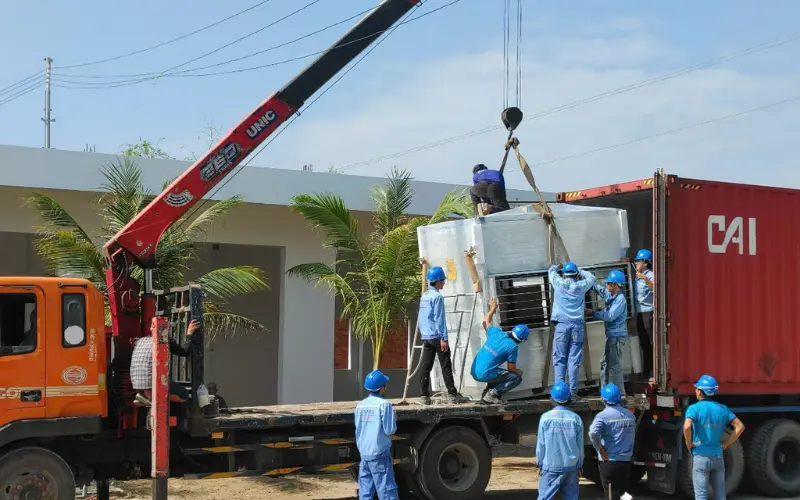
Dong SaPa’s engineering team supports clients from site survey, cooling-load calculation, and equipment selection through design, installation, HVAC acceptance, and post-handover maintenance. This integrated approach helps align technical requirements with both initial investment and long-term operating costs.
5. Frequently asked questions
5.1. Is a VRV system suitable for a townhouse?
Yes, particularly for larger townhouses with multiple floors and rooms where architectural appearance and outdoor-unit space are important considerations. In such cases, VRV may be more suitable than installing multiple standalone split systems.
5.2. Is a VRV system more energy-efficient than standalone split units??
For buildings with long operating hours and multiple independently used zones, VRV can optimize energy use through inverter technology and load-based capacity control.
5.3. Is VRV a good fit for villas??
VRV can be particularly suitable for villas because it reduces the number of outdoor units, supports architectural aesthetics, operates quietly, and allows independent temperature control across different spaces.
5.4. How often should a VRV system be maintained?
To support reliable operation and maintain system performance, inspection and maintenance are generally recommended every 3 to 6 months, depending on operating frequency and installation conditions.
6. Conclusion
A VRV system is not the right solution for every building. However, it is well worth considering for mid-size to large projects with multiple functional spaces, energy-efficiency requirements, high architectural expectations, and a need for flexible system control.
A properly designed system can help optimize initial investment while reducing operating and maintenance costs over its service life. Before making a decision, property owners should therefore evaluate actual operating needs, cooling load, and future development plans to determine the most appropriate HVAC solution.
If you are still considering when to use a VRV system, or whether your project is better suited to VRV, standalone split systems, or a chiller, contact Dong SaPa for technical consultation.
Dong SaPa’s HVAC engineering team can support you with:
- On-site project surveys.
- Cooling-load calculations.
- HVAC solution consulting based on project requirements and budget.
- RV system design and installation in accordance with technical requirements.
- Long-term warranty, maintenance, and technical support.
Selecting the right HVAC solution from the beginning provides a stronger foundation for efficient operation, cost control, and long-term building value.
EAST SAPA ENGINEERING CORPORATION
- Showroom: 456/72 Cao Thang (Extended), Hoa Hung Ward, Ho Chi Minh City.
- 24/7 Project Hotline: 0988 200 200 (Mr. Vinh)
- Email: quangvinh@dongsapa.com.vn
- Website: dongsapa.com.vn
Other news