
Reduce HVAC system operating costs by up to 30%: The golden solution for business owners.
In the context of constantly fluctuating electricity prices and increasing operational costs, many businesses are facing the pressure to cut budgets while still ensuring continuous production and business operations. It is worth noting that HVAC systems usually account for 40 – 60% of the total power consumption of a building or factory, but have not been properly optimized.
HVAC cost savings are becoming a priority for many businesses. An optimized HVAC system not only helps reduce up to 30% of operational costs but also enhances equipment efficiency, limits breakdowns, and creates a stable working environment. The article below will share practical solutions to help businesses optimize costs and increase long-term investment efficiency.
Why is the HVAC system a budget-draining “anchor” for businesses?
Many business owners often focus on controlling personnel, raw material, or logistics costs but ignore an expense that “silently” increases every month: HVAC system operational costs.
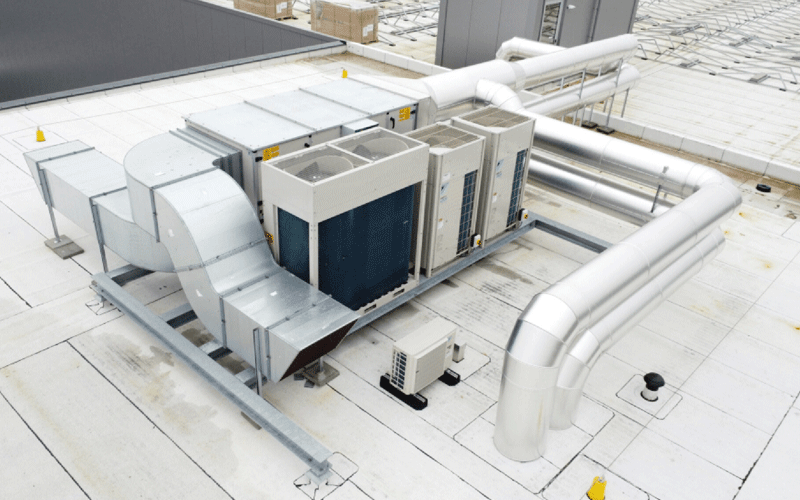
If designed and operated correctly, HVAC is an investment that brings a stable working environment, protects equipment, and enhances labor productivity. Conversely, when the system operates inefficiently, it can become a “money-burning machine” for the business.
Power consumption accounts for a huge proportion
For:
- Manufacturing factories
- Office buildings
- Commercial centers
- Hotels
- Hospitals
then the HVAC system is usually the item with the largest power consumption.
Some common causes that lead to high electricity consumption:
- Equipment is old, efficiency declines over time
- Chillers or air conditioners operate continuously at maximum load
- Fans and pumps run at a fixed speed instead of adjusting according to actual demand
- The control system has not been automated
- Airflow design is not yet optimized
Just the fact that the system operates at a low efficiency of 10 – 15% can also cause electricity bills to increase by tens of millions of VND per month for medium-sized businesses.
Improper maintenance causes costs to increase exponentially
Not a few businesses only perform repairs when equipment encounters breakdowns.
This is a mindset that causes the Total Cost of Ownership (TCO) to increase very rapidly.
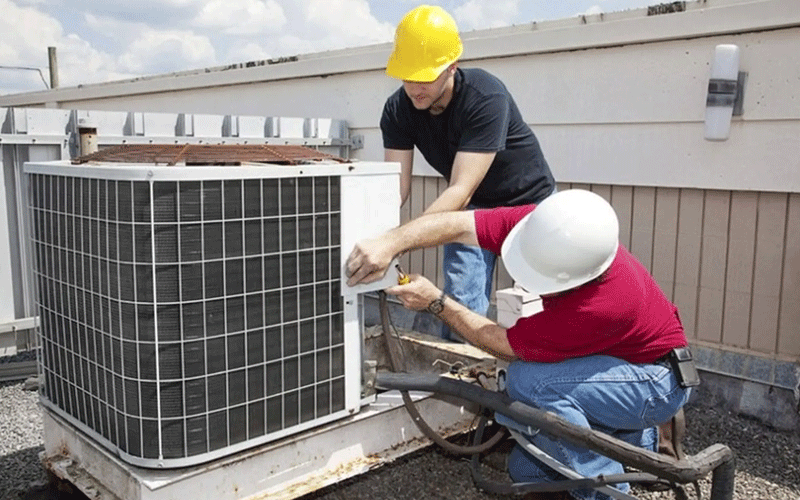
Example: A dirty air filter seems insignificant but can cause the fan to operate at a higher capacity, leading to increased power consumption and a significant reduction in motor lifespan.
System design is not yet optimized
This is a common cause in many projects that have been put into use for many years or have changed their functions.
Some common issues:
- Air ducting is too long, causing large pressure losses
- Air plenum boxes distribute airflow unevenly
- Air louvers are arranged unreasonably
- Duct size is not suitable for actual flow rates
- Losses on the chilled water piping exceed design limits
The consequences are:
- Equipment must run longer
- More power consumption
- The space still does not reach the desired temperature
Lack of smart monitoring and control systems
Many businesses still operate HVAC manually:
- Turn on/off based on intuition
- No optimized operating schedule
- No tracking of power consumption
- No early detection of abnormalities

This leads to equipment operating even when unnecessary or operating at a high load for a long time, causing a huge waste of power and corporate HVAC maintenance costs.
“Pain points” of business owners when the HVAC system operates inefficiently
Increased electricity costs are just the tip of the iceberg. An inefficiently operating HVAC system also creates many consequences that directly affect revenue, productivity, and the brand image of the business.
Operational costs increase but efficiency does not improve
This is a situation that many businesses face:
- Electricity bills increase steadily every month
- Maintenance costs are getting larger
- Equipment continuously develops faults
- Yet the quality of cooling and ventilation still fails to meet requirements.
This means the business is spending more money but not creating more value.
Production disruptions cause hard-to-measure losses
An HVAC breakdown occurring in a:
- Electronics factory
- Food workshop
- Cleanroom
- Data center
- Pharmaceutical factory
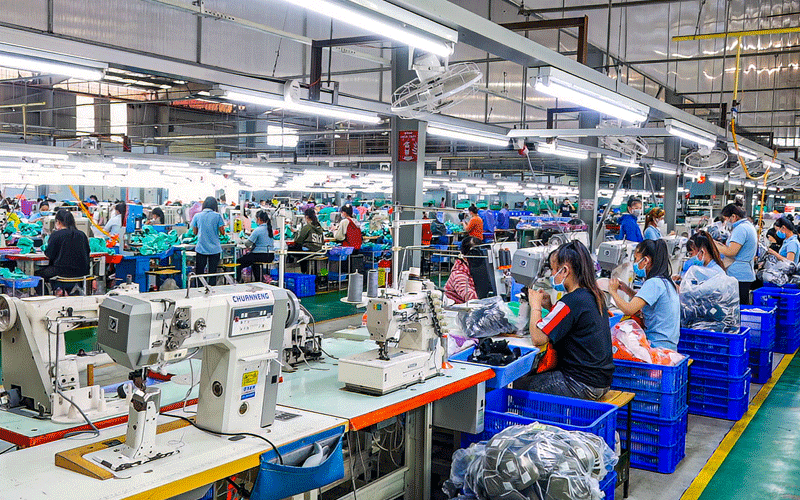
can lead to:
- Stopping production lines
- Spoiled raw materials
- Deviations in temperature and humidity conditions
- Delayed delivery schedules
- Incurring emergency remediation costs
In many cases, the loss from stopping production is much larger than the investment cost to optimize the system right from the start.
Equipment degrades quickly, lifecycle is shortened
When having to operate continuously under overloaded conditions:
- Compressors fail quickly
- Fans decrease in lifespan
- Chilled water pumps operate unstably
- Control valves and sensors easily develop faults
Instead of being used for 15–20 years according to design, many systems only operate stably for 8–10 years before having to be overhauled or replaced.
This is a very large investment that many businesses can completely avoid by efficient HVAC operation and performing corporate HVAC maintenance according to the correct procedure.
An unstable working environment reduces personnel productivity
Temperatures that are too hot, too cold, or uneven air distribution will make employees:
- Fatigued
- Decrease capability to focus
- Lower working performance
- Increase error rates
For factories with strict requirements on temperature and humidity, unstable air conditioning also directly affects product quality and defect rates.
Businesses lose their advantage in the green development trend
More and more partners, customers, and investors evaluate businesses through the criteria of:
- Energy consumption
- Carbon emissions
- Resource utilization efficiency
- Energy management systems
A modern, energy-saving factory air conditioning solution not only helps optimize operational costs but also contributes to building a professional, sustainably developing, and environmentally responsible business image.
That is exactly the competitive advantage that many businesses are aiming for in the current green transition phase.
5 Golden Solutions to help cut up to 30% of HVAC operational costs
Not every business needs to invest billions of VND to replace the entire HVAC system. In fact, many projects have saved from 15–30% of operational costs just by applying the right solutions and optimizing the correct bottlenecks.
Below are 5 solutions evaluated by M&E experts as bringing the highest and most sustainable Return on Investment (ROI).
Perform corporate HVAC maintenance proactively instead of repairing when broken
This is the solution with the lowest cost but brings the most distinct efficiency.
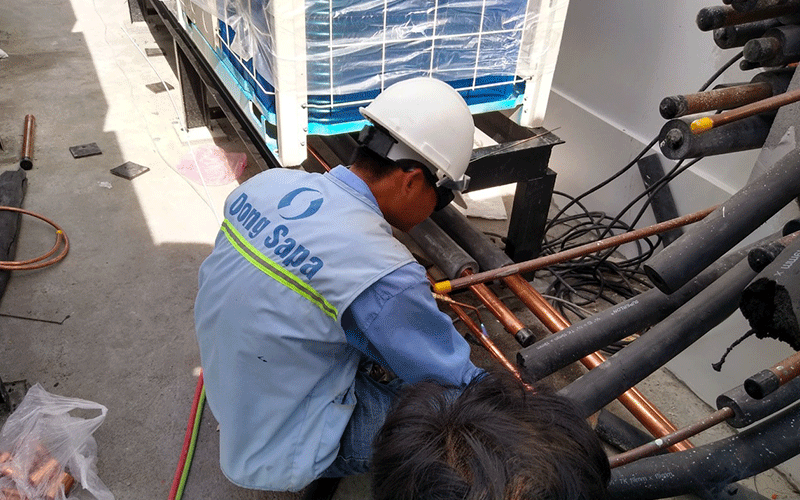
This is a cause of huge waste.
A lot of businesses only maintain when the system shows errors or efficiency drops sharply. By then, the equipment has already had to work in an overloaded condition for a long time, causing power waste and reduced lifespan.
Items that need to be performed periodically
Monthly
- Check air filters
- Clean indoor units, outdoor units
- Check for abnormal noise and vibration
Quarterly
- Check gas pressure
- Check the electrical system and control panels
- Check belts, bearings, fan motors
Annually
- Clean chilled water piping
- Calibrate temperature sensors
- Check Chiller efficiency
- Overall evaluation of the HVAC system
Benefits achieved
- Reduce power consumption
- Limit sudden breakdowns
- Increase equipment lifespan
- Reduce major repair costs
A methodical corporate HVAC maintenance plan always costs much less than replacing compressors or stopping production due to system breakdowns.
Upgrade to Inverter technology and high-efficiency Chillers
If the system has operated for 10 years or more, businesses should consider re-evaluating equipment efficiency. Old Chiller lines or air conditioners often consume significantly more power than modern technology.
Why does Inverter help save electricity?
Instead of running at 100% capacity and then turning off continuously, Inverter technology adjusts the motor speed according to the actual load.
This helps to:
- Reduce starting current
- Reduce temperature fluctuations
- Reduce mechanical wear and tear
- Save power throughout the entire operation process
When should you upgrade?
Businesses should consider replacement when:
- Equipment frequently breaks down
- Repair costs increase continuously
- Power consumption is abnormally high
- The COP or IPLV of the Chiller no longer meets current requirements
Although the initial investment cost is larger, the payback period is usually only 2–5 years thanks to the savings in electricity and maintenance costs.
Apply smart control systems and BMS
Many businesses still operate HVAC using manual methods:
- Employees turn equipment on/off themselves
- No fixed operating schedule
- No tracking of electricity consumption levels
- No early detection of abnormalities
This is a cause of huge waste.
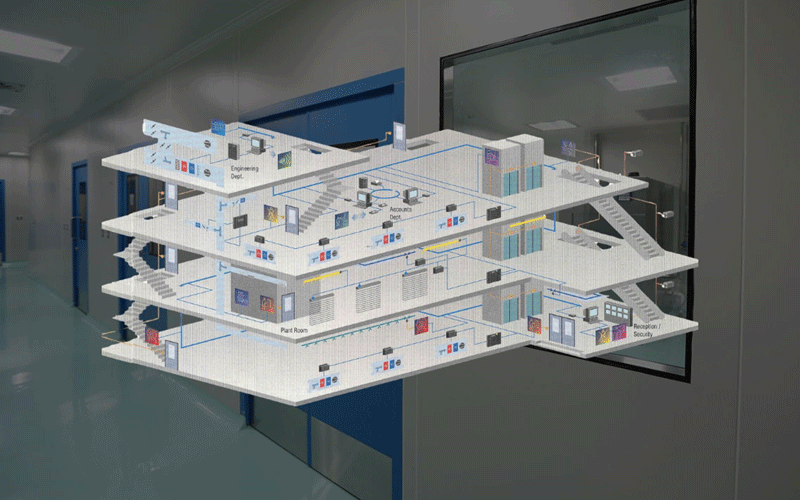
What can a BMS system do?
A modern building management system (Building Management System) is capable of:
- Automatically adjusting temperature according to each zone
- Controlling Chillers according to the actual load
- Controlling fans and pumps using variable frequency drives (VFDs)
- Monitoring power in real time
- Warning of breakdowns before equipment breaks
Value brought back
|
Traditional operation |
Operation by BMS |
|
Manual adjustment |
Automatic adjustment |
|
No data available |
Continuous data tracking |
|
Hard to detect errors |
Early warning |
|
Large power consumption |
Optimized power consumption |
This is one of the solutions that helps operate HVAC efficiently and creates a foundation for businesses to digitally transform in energy management.
Optimize the design of air duct systems and air distribution
Many businesses invest in modern equipment but still do not save electricity because the air distribution system has not been optimized.
An unreasonably designed air duct system will increase pressure losses and force the fan to operate at a higher capacity.
Points that need to be checked
- Is the air duct size suitable for the flow rate?
- Are there too many bends, elbows, or deviations?
- Are air louvers distributed evenly?
- Do air plenum boxes balance the flow rate?
- Is there air leakage along the duct run?
Optimal solutions
- Redesign shorter duct routes
- Reduce pressure losses
- Balance the airflow rate for each zone
- Apply thermal insulation according to standards
- Use efficient aerodynamic accessories
An optimized air distribution system not only helps save HVAC costs but also creates a more stable and pleasant working environment.
Train the operations team and build an energy management process
With the same HVAC system, two different operation units can create a difference in power consumption of up to tens of percent.
The cause lies in people.
Common mistakes
- Setting the temperature too low
- Turning on all equipment despite small loads
- Not checking filters periodically
- Not recording operational data
- Not detecting signs of abnormalities
Businesses should build
Daily operation checklist
- Check temperature
- Check pressure
- Check airflow rate
- Record consumed power
Periodic maintenance checklist
- Cleaning
- Calibration
- Check sensors
- Evaluate efficiency
Personnel training
- Standard operating procedures
- Recognize signs of damage
- Load optimization skills
- Energy management
A well-trained operations team will help businesses maintain long-term efficiency without needing to invest too many incurred costs.
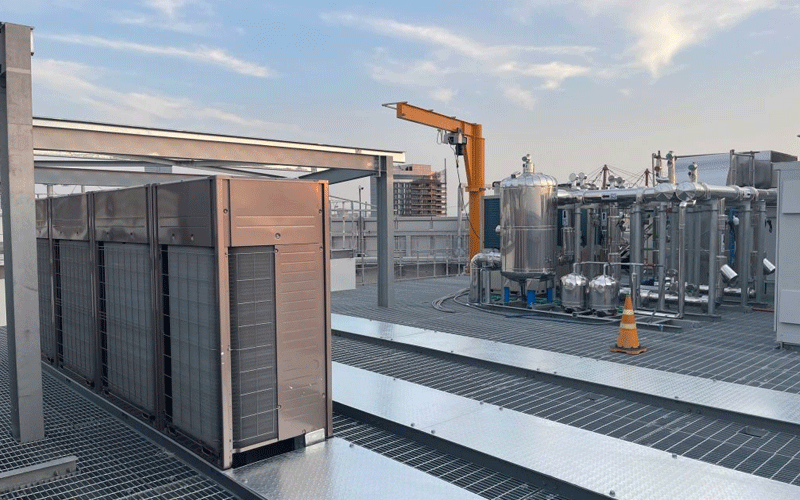
Outstanding long-term benefits when optimizing HVAC
Optimizing the HVAC system is not merely reducing monthly electricity bills.
It is an investment strategy that brings long-term value to the business.
Sustainable operational cost savings
- Reduce power consumption
- Reduce repair costs
- Reduce equipment replacement costs
- Reduce production downtime
Extend system lifespan
Equipment operating under the correct load will:
- Reduce mechanical wear and tear
- Reduce pressure on the compressor
- Increase the lifespan of fans, pumps, and motors
Enhance working productivity
A stable temperature environment helps:
- Employees work more comfortably
- Reduce errors in production
- Ensure product quality
Increase green business image
A business that uses energy efficiently will:
- Enhance reputation with partners
- Meet ESG criteria
- Contribute to reducing carbon emissions
- Increase competitiveness in the market
Conclusion
Energy costs will continue to be one of the largest expenses for businesses in the coming years. Therefore, investing in the HVAC system should not just stop at the goal of “cooling”, but needs to be viewed as a long-term energy management and cost optimization solution.
From corporate HVAC maintenance, upgrading Inverter technology, applying BMS, optimizing duct systems to training operations personnel, each solution contributes to building an **efficiently operating HVAC** system, reducing waste and increasing profits.
Do you want to know how much cost your business’s HVAC system can save?
Let Dong Sapa’s team of engineers survey and evaluate the current operational status, thereby proposing optimal solutions suitable for the budget and actual needs. A right solution today will help your business significantly reduce electricity costs, extend equipment lifespan, and enhance production efficiency for many years to come.
Dong Sapa – A reputable M&E contractor, specializing in designing, executing, and optimizing HVAC systems for factories, buildings, and industrial projects nationwide.
Other news