
Top VRF Air Conditioner Brands in Vietnam: Which One to Choose?
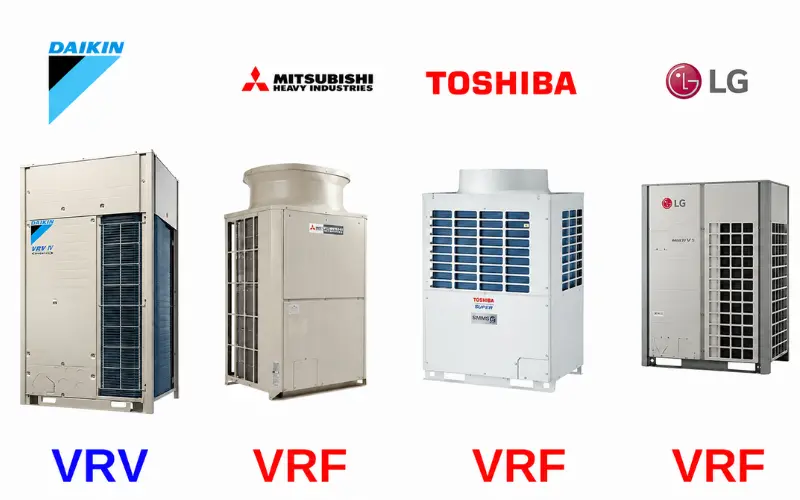
Leading VRF air conditioner brands attracting attention in Vietnam include Daikin, Mitsubishi Electric, Mitsubishi Heavy Industries, Panasonic, Toshiba, LG, Samsung, Midea, and Gree, among others. VRV is Daikin’s proprietary trademark, while other manufacturers offer their own product ranges based on VRF technology.
When investing in a central air conditioning system for a villa, hotel, or office building, choosing a well-known brand does not necessarily mean choosing the most suitable solution. Operating efficiency, initial investment costs, maintenance requirements, and building characteristics should all be evaluated together.
So, which VRF air conditioner brands are worth considering for your project?
1. Are VRV and VRF the Same? Why Does the Distinction Matter When Choosing a Brand?
Is VRV Exclusive to Daikin or a Generic Industry Term?
VRV (Variable Refrigerant Volume) is Daikin’s proprietary trademark for air conditioning systems that adjust refrigerant flow according to cooling demand.
VRF (Variable Refrigerant Flow), meanwhile, is the generic technical term for air conditioning systems operating on a similar principle.
Therefore, when searching for VRF air conditioner brands, users are generally looking for manufacturers offering VRV/VRF central air conditioning systems.
Understanding this distinction is particularly important when selecting equipment, reviewing product catalogues, or preparing technical documentation for a project.
What Types of Buildings Are Suitable for VRV/VRF Systems?
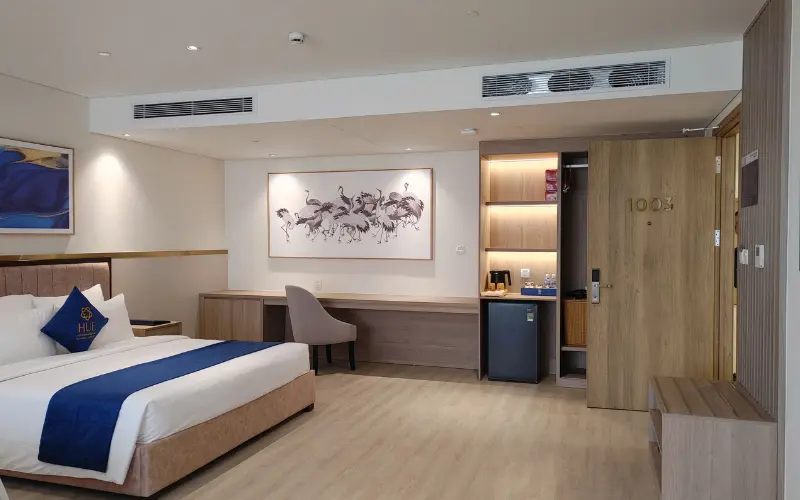
With the ability to connect multiple indoor units and provide independent zone control, VRV/VRF systems are often considered for villas, penthouses, hotels, offices, showrooms, and commercial buildings.
However, actual performance also depends on cooling load requirements, space zoning, and operating schedules.
2. Leading VRF/VRV Air Conditioner Brands in Vietnam
The market offers numerous brands with different equipment portfolios, control solutions, and investment requirements. The following manufacturers are worth considering when selecting a central air conditioning system.
2.1. Daikin – The Brand Behind VRV Technology
When discussing VRF/VRV air conditioning brands, Daikin is often one of the first names that comes to mind for project owners.
Daikin has developed multiple generations of VRV systems, offering a range of outdoor units, indoor units, and controllers for residential and commercial applications.
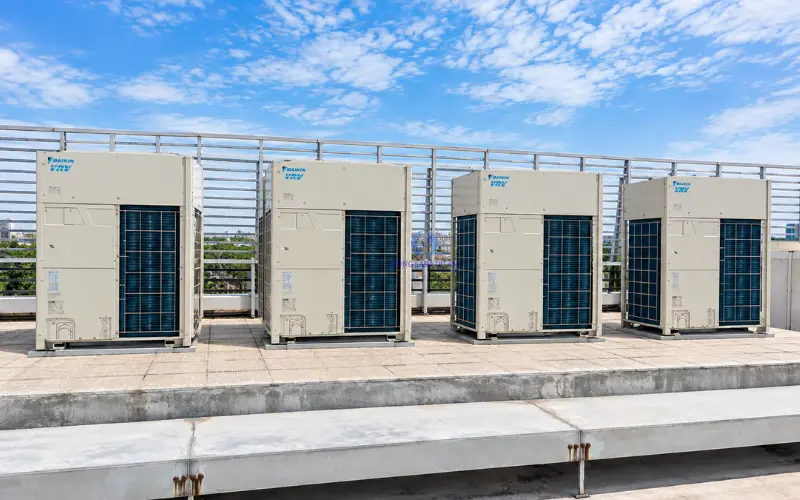
A notable advantage is the ability to configure multi-zone air conditioning systems with centralized control and operational management solutions, depending on the selected configuration.
- Suitable for: Luxury villas, offices, hotels, and buildings requiring control across multiple spaces.
- Key considerations: Initial investment costs, controller compatibility, and replacement part prices for specific models.
Even with a Daikin VRV system, performance still depends significantly on refrigerant piping design, outdoor unit placement, and the quality of system commissioning.
2.2. Mitsubishi Electric and Mitsubishi Heavy Industries – Two Distinct Brands
Mitsubishi Electric and Mitsubishi Heavy Industries are sometimes mistaken for the same air conditioning brand. In fact, they are separate companies offering distinct VRF product ranges.
2.2.1 Mitsubishi Electric – City Multi
The City Multi range is designed for buildings requiring multi-zone control, with a selection of indoor units and building management integration options depending on the system configuration.
It is worth considering for offices, hotels, and buildings that require centralized operational management.
2.2.2 Mitsubishi Heavy Industries – KX
The KX series offers VRF configurations for residential and commercial applications, allowing cooling capacities and control options to be selected according to project requirements.
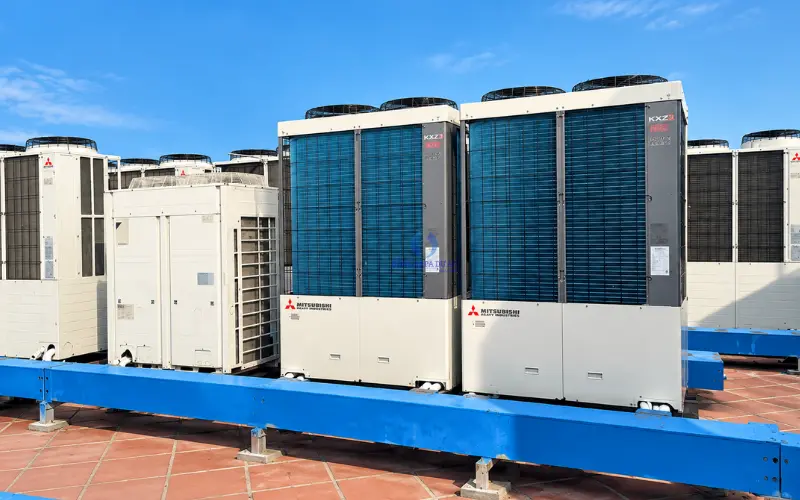
When comparing the two Mitsubishi brands, technical specifications, warranty policies, and spare parts availability should be verified separately. Their equipment ecosystems should not be assumed to be interchangeable.
2.3. Panasonic – Flexible VRF Solutions for Different Building Applications
Panasonic offers VRF solutions under its ECOi range, serving multi-zone air conditioning requirements in hotels, offices, and commercial buildings.
Key considerations include the available indoor unit range, control options, and flexibility in selecting configurations to suit different operating requirements.
However, project owners should verify which ECOi generations are available in Vietnam, review their performance specifications, and assess building management system integration capabilities before making a decision.
2.4. Toshiba – VRF Systems with Multi-Zone Control Capabilities
Toshiba is known for VRF product ranges such as SMMS, designed for buildings with cooling loads that vary over time.
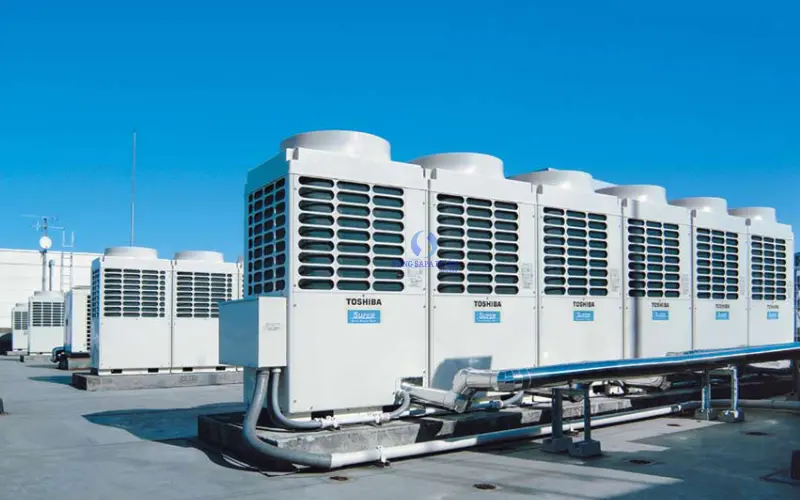
These systems can adjust operation according to the requirements of individual zones, making them suitable for offices, hotels, and commercial spaces with different occupancy schedules.
When considering Toshiba, it is advisable to review catalogues for the relevant product generation and verify local technical support and spare parts availability.
2.5. LG and Samsung – Options for Modern Building Projects
LG and Samsung are also among the VRF air conditioner brands worth considering.
LG offers its Multi V VRF systems with control and operational management solutions tailored to different configurations.
Samsung offers its DVM range, featuring various equipment options and control connectivity solutions for commercial applications.
Both brands offer solutions aligned with modern building management trends. However, connectivity features, performance, and investment costs must be evaluated for individual models rather than judged solely by brand reputation.
2.6. Midea and Gree – Options for Budget-Conscious Projects
Not every building project requires a high-cost air conditioning solution.
Midea’s VRF ranges, including V8, and Gree’s GMV systems provide additional options for project owners comparing system configurations and investment budgets.
Any pricing advantage should be assessed using actual quotations rather than assuming that one brand is always less expensive than another.
Importantly, a lower purchase price does not necessarily indicate inferior quality or higher electricity consumption. The key is to evaluate energy efficiency, noise levels, warranty coverage, and technical support capabilities.
3. VRF/VRV Air Conditioner Brands Comparison: Which Is the Right Choice?
To help evaluate different VRF air conditioner brands, project owners can refer to the following comparison table:
|
Brand |
Representative Product Range |
Recommended Applications |
|
Daikin |
VRV |
Buildings requiring flexible configurations and multi-zone control |
|
Mitsubishi Electric |
City Multi |
Buildings and offices requiring integrated control systems |
|
Mitsubishi Heavy Industries |
KX |
Residential and commercial buildings |
|
Panasonic |
ECOi |
Offices, hotels, and commercial facilities |
|
Toshiba |
SMMS |
Multi-zone buildings with variable cooling loads |
|
LG / Samsung |
Multi V / DVM |
Buildings requiring control and system integration solutions |
|
Midea / Gree |
V8 / GMV |
Projects requiring comparisons across different budget options |
The table is intended as a general guide, not a ranking of product quality or performance. Product availability and technical specifications should be verified for each model.
3.1. Should You Choose a VRF System Based on Brand Alone?
The answer is no.
Even within the same brand, different product ranges may vary in cooling capacity, control capabilities, and operating efficiency.
Even a premium system can experience excessive noise, unnecessary energy consumption, or maintenance difficulties if it is not properly designed.
Therefore, when comparing VRF air conditioner brands, it is essential to evaluate not only the equipment but also the proposed system design and installation approach
4. Five Key Criteria for Choosing a VRV/VRF Brand to Avoid Future Costs
4.1. Initial Investment and Total Cost of Ownership
The cost of outdoor and indoor units represents only part of the total investment.
Project owners must also account for copper refrigerant piping, insulation, condensate drainage, controllers, installation labor, and maintenance costs.
Evaluating the total cost of ownership (TCO) helps avoid situations where initial savings lead to substantial expenses during operation.
4.2. Actual Energy Efficiency
The energy efficiency of a central air conditioning system should be evaluated based on its performance and operating conditions.
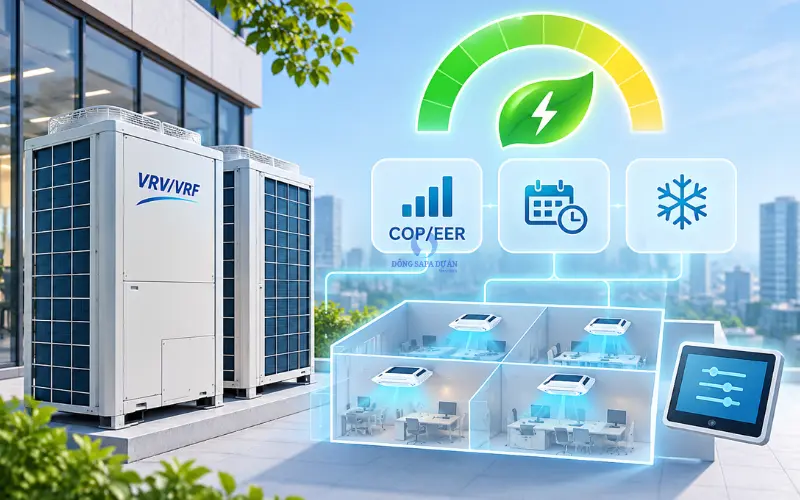
Performance indicators such as the Coefficient of Performance (COP), Energy Efficiency Ratio (EER), and seasonal efficiency ratings can support comparisons when reported under equivalent testing conditions.
Operating hours, cooling loads across individual zones, and control strategies also influence electricity consumption.
4.3. Durability Under Vietnam’s Climatic Conditions
High temperatures, humidity, dust, and coastal environments can affect equipment service life.
For buildings located near the coast, particular attention should be paid to corrosion resistance, outdoor unit placement, and maintenance planning.
4.4. Warranty Services and Spare Parts Availability
Before selecting a VRF air conditioner brand, it is advisable to verify the warranty period, applicable terms and conditions, and spare parts availability.
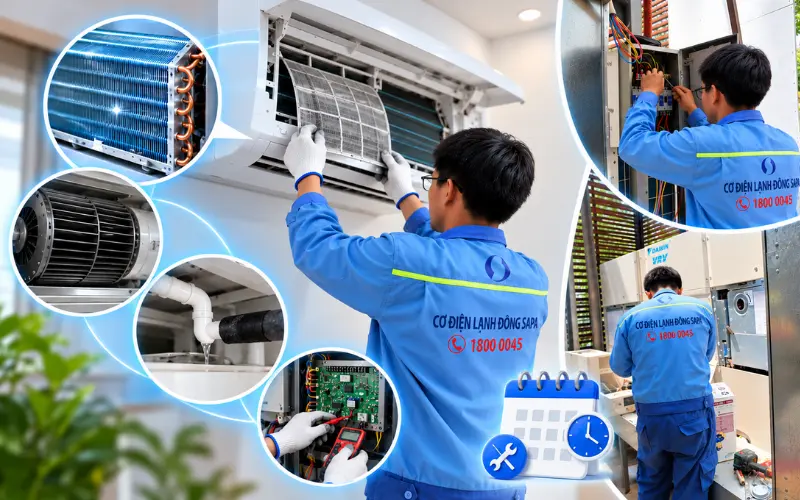
A suitable system should also allow for convenient maintenance and minimize operational downtime in the event of a malfunction.
4.5. HVAC Design and Installation Expertise
This factor is often overlooked when comparing quotations.
HVAC contractors must calculate cooling loads and verify refrigerant piping lengths, elevation differences, and indoor-to-outdoor capacity connection ratios against manufacturer specifications.
Leak testing, vacuum evacuation, refrigerant charging, and system commissioning must also be performed in accordance with the required procedures.
Even high-quality equipment can only deliver its intended performance when properly designed, installed, and operated.
5. Which VRV/VRF Brand Should You Choose for Different Building Types?
5.1. Villas and Penthouses – Prioritizing Comfort and Aesthetics
For multi-room villas, Daikin, Mitsubishi Electric, Mitsubishi Heavy Industries, Panasonic, and other brands offering suitable system configurations may be considered.
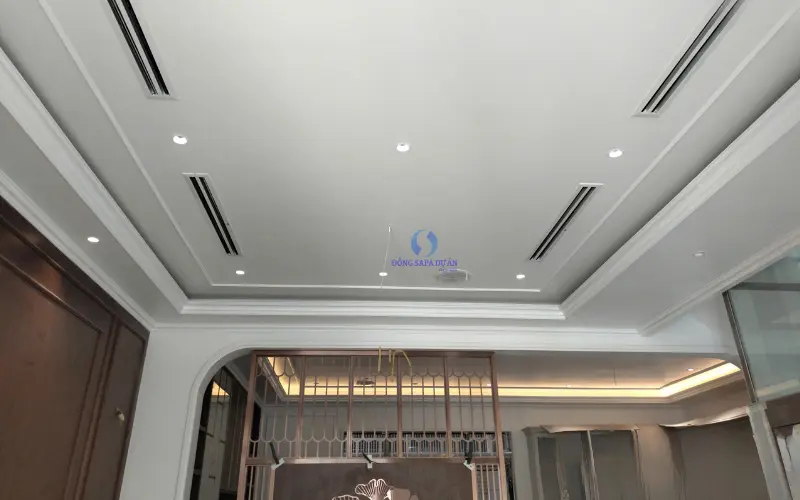
Key priorities include indoor unit noise levels, concealed installation options, independent room control, and outdoor unit placement.
Excessive oversizing simply to provide spare capacity should be avoided, as it may increase costs and compromise operating efficiency.
5.2. Offices, Hotels, and Showrooms – Prioritizing Operational Flexibility
These buildings often contain multiple zones with different operating schedules.
When evaluating VRF air conditioner brands, consideration should be given to operating schedule management, centralized control, and Building Management System (BMS) integration where required.
Maintenance requirements should also be considered to minimize disruption to business operations.
5.3. Commercial Buildings – Prioritizing Long-Term Investment Efficiency
For buildings with high cooling loads, system selection should not be limited to VRV/VRF solutions.
Project owners may also need to compare chiller-based systems, considering building scale, operating hours, available plant space, and total operating costs.
No single central air conditioning solution is optimal for every building.
6. Central Air Conditioning Design and Installation Services at Dong SaPa
Choosing between Daikin, Mitsubishi, Panasonic, and other brands becomes easier when a clear technical solution has been developed.
Dong SaPa provides consulting, design, and installation services for air conditioning and ventilation systems across a wide range of building types.
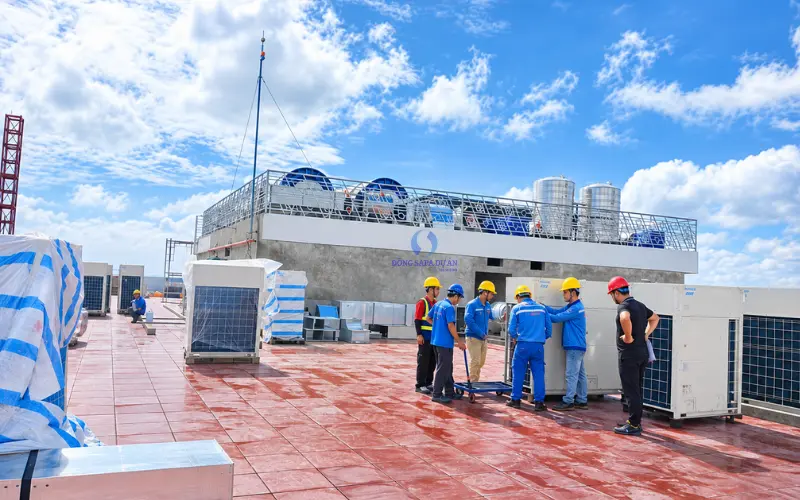
Through site surveys, cooling load calculations, and assessments of operational requirements, Dong SaPa helps project owners select equipment configurations that align with building functions, budgets, and operating needs.
Are you considering different VRF/VRV air conditioner brands for your project? Contact Dong SaPa at 0988 200 200 for professional advice on suitable central air conditioning design and installation solutions.
7. Frequently Asked Questions About VRF/VRV Air Conditioner Brands
7.1. Which VRF Air Conditioner Brand Is the Most Energy Efficient?
This cannot be determined by brand alone. Models within the same market segment should be compared based on their efficiency at different load conditions and their actual operating requirements.
7.2. What Is the Difference Between Daikin VRV and Mitsubishi VRF Systems?
Both systems operate on the principle of variable refrigerant flow. The differences lie in their product configurations, control systems, technical specifications, and manufacturer-specific support solutions.
7.3. Are VRV/VRF Systems Suitable for Villas?
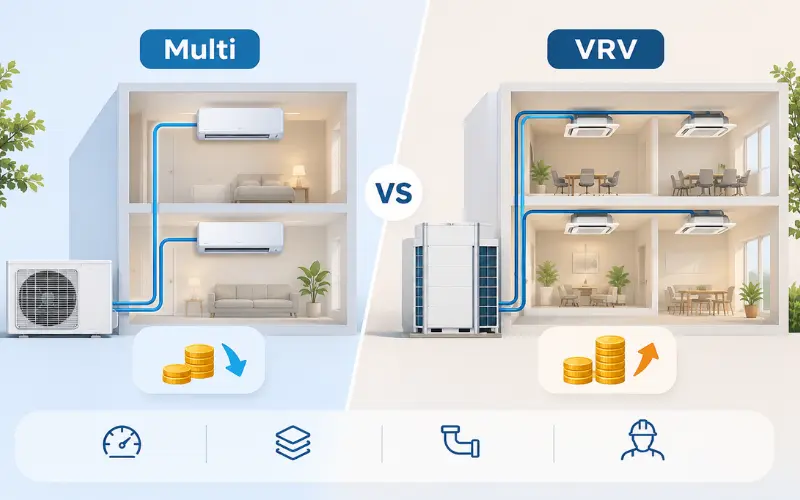
Yes, particularly for villas with multiple rooms requiring independent control. However, VRV/VRF systems should still be compared with Multi Split systems based on cooling loads, floor area, and available budget.
7.4. Should You Choose a Lower-Priced Brand or One with Better After-Sales Support?
Total cost of ownership, spare parts availability, and maintenance services should all be considered. A lower initial purchase price does not necessarily provide better long-term economic value.
8. Conclusion
Each VRV/VRF central air conditioning brand offers its own product ranges and intended applications. Therefore, choosing the right solution involves more than simply selecting the most recognized brand.
When evaluating VRF air conditioner brands, project owners should consider cooling loads, budgets, energy efficiency, after-sales support, and installation quality together. A properly engineered solution from the outset provides the foundation for reliable, efficient operation and convenient long-term maintenance.
EAST SAPA ENGINEERING CORPORATION
- Showroom: 456/72 Cao Thang Street (Extended), Hoa Hung Ward, Ho Chi Minh City, Vietnam.
- 24/7 Project Hotline: 0988 200 200 (Mr. Vinh)
- Email: quangvinh@dongsapa.com.vn
- Website: dongsapa.com.vn
Other news