
Central Air Conditioning Maintenance: How Often Is It Needed?
Your central air conditioning system is still cooling effectively, showing no error codes, and making no unusual noises. Does it really need maintenance? This is a common question among building owners and facility managers.
In practice, many HVAC systems are inspected only after problems arise, such as reduced cooling performance, increased energy consumption, or unexpected equipment shutdowns. By that point, repair costs can be significantly higher than the cost of routine preventive maintenance.
So, how often should central air conditioning maintenance be performed? Does a system that has been in operation for 15–20 years necessarily need to be replaced? Join Dong SaPa as we explore recommended maintenance schedules and the key factors that determine HVAC equipment service life.
1. How Often Should Central Air Conditioning Maintenance Be Performed?
There is no single central air conditioning maintenance interval that applies to every building. Inspection frequency depends on the type of equipment, operating hours, installation environment, and manufacturer recommendations.
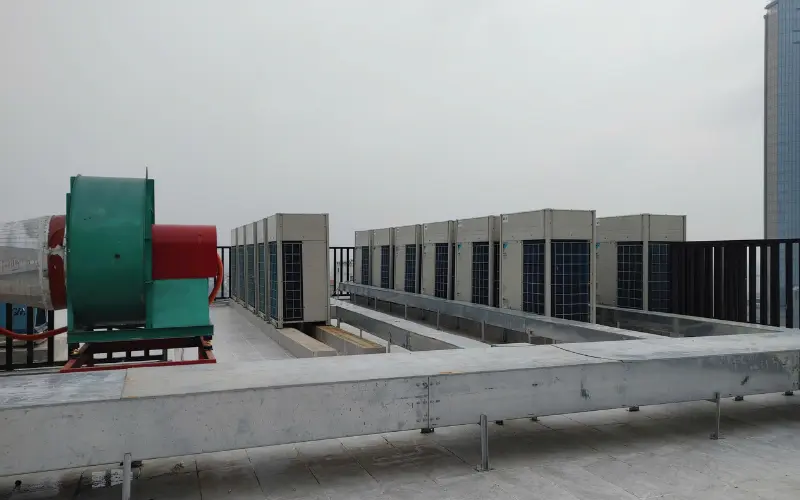
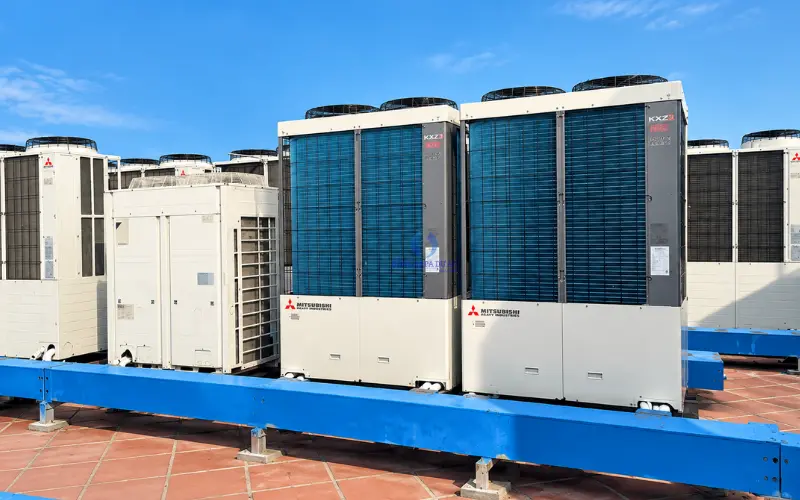
As a general guideline, VRV/VRF systems installed in offices or villas may be inspected every 3–6 months. Hotels, shopping malls, and facilities with continuous operation typically require more frequent inspections.
1.1. Recommended Maintenance Intervals by HVAC System Type
|
System Type |
Suggested Inspection Frequency |
|
Offices and villas |
Every 3–6 months |
|
Hotels and shopping malls |
Every 1–3 months |
|
Chiller |
Daily monitoring, with monthly or quarterly inspections |
|
AHU/FCU |
Air filter inspections and cleaning based on usage and environmental conditions |
These intervals are general guidelines and do not replace the maintenance instructions provided by the manufacturer for each specific equipment model.
1.2. Factors That Affect Maintenance Frequency
Even identical equipment models may require different maintenance schedules depending on their operating conditions.
For example, an office air conditioning system operating eight hours a day generally experiences less intensive use than a hotel system running almost continuously. Similarly, outdoor units installed in dusty or coastal environments may require more frequent inspection and cleaning.
Therefore, rather than relying solely on a fixed schedule, building owners should develop a central air conditioning maintenance plan based on actual operating conditions.
2. Why Is Regular Central Air Conditioning Maintenance Important?
An air conditioning system may continue operating even after its efficiency has declined. As a result, technical issues can go unnoticed until they become more serious.
2.1. Maintaining Efficiency and Controlling Energy Consumption
Over time, dust and debris can accumulate on heat exchanger coils, air filters, and related components, reducing heat transfer efficiency.
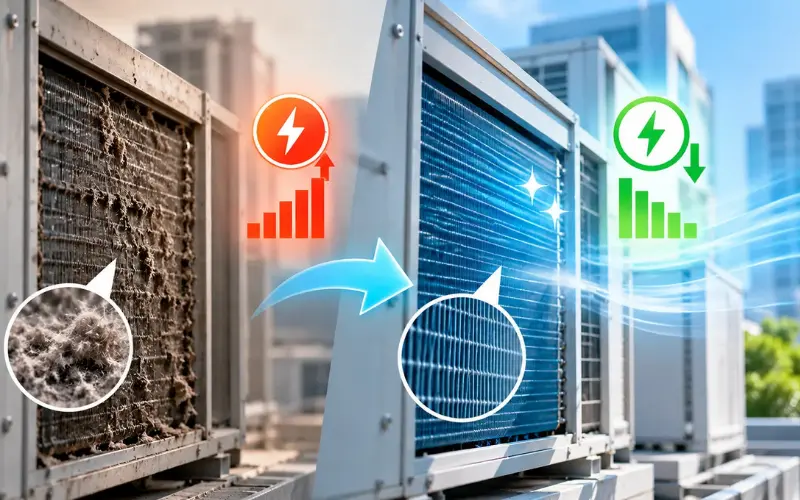
As a result, the system may need to operate longer to meet cooling demand, leading to increased electricity consumption.
Proper central air conditioning maintenance helps maintain appropriate operating conditions, minimize performance degradation, and control energy costs.
2.2. Reducing the Risk of Unexpected Equipment Failures
Routine inspections can help identify issues such as abnormal electrical connections, excessive vibration, poor condensate drainage, or operating parameters outside their specified ranges.
Addressing these issues early helps reduce the risk of more extensive equipment failures, particularly in hotels, offices, and industrial facilities where reliable air conditioning is essential.
3. Should Central Air Conditioning Systems Be Replaced After 15–20 Years?
Many people assume that air conditioning equipment should be replaced once it has been in service for more than 15 years. However, from an HVAC engineering perspective, equipment age alone does not determine whether a system can remain in operation.
3.1. Is Equipment Age the Only Factor That Matters?
Consider two air conditioning systems installed at the same time.
The first system was properly sized, operated under suitable conditions, and maintained regularly. The second frequently operated under excessive loads, received little cleaning, and was repaired only when problems occurred.
After many years, the technical condition of these two systems may differ significantly, even though they are the same age.
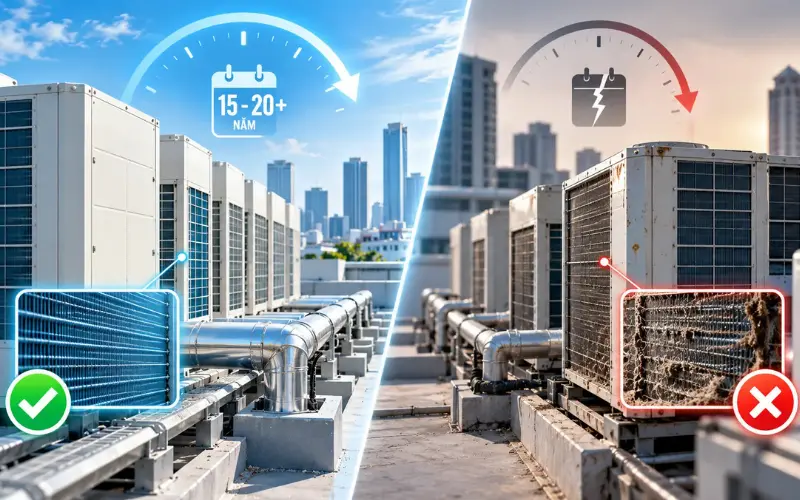
Some well-managed and properly maintained chiller systems can remain operational for more than 15–20 years, or even longer. However, this does not mean that every VRV/VRF or chiller system will achieve a similar service life.
Conversely, even relatively new equipment can fail prematurely if it is improperly installed or operated under unsuitable conditions.
What matters is not simply how many years the system has been in service, but how well it is currently performing.
3.2. When Should You Maintain, Repair, or Replace an HVAC System?
To make an informed decision, building owners should evaluate the following factors together:
- Operating condition: Does the system frequently display error codes, shut down unexpectedly, or deliver inconsistent cooling performance?
- Energy efficiency: Has electricity consumption increased unexpectedly under comparable load conditions?
- Repair history: Does the same component experience recurring failures?
- Spare parts availability and cost: Are replacement parts still supported and reasonably priced?
- Suitability for current needs: Does the system’s existing capacity and functionality still meet the building’s requirements?
If the system remains reliable, meets performance requirements, and can be repaired at a reasonable cost, continued maintenance may be the more economical option.
Conversely, if failures become frequent, replacement parts are difficult to obtain, or operating costs become excessive, building owners should consider upgrading the system.
Modern HVAC asset management also emphasizes life-cycle cost (LCC), which considers the total cost of equipment investment, energy consumption, maintenance, and repairs over time, rather than comparing only the purchase price of new equipment.
4. Five Warning Signs Your Central Air Conditioning System Needs Inspection
There is no need to wait until the next scheduled maintenance visit. If any of the following warning signs appear, building owners should arrange a professional HVAC inspection.
4.1. Reduced or Uneven Cooling Performance
Some rooms may fail to reach their temperature setpoints, or cooling may take longer than expected even though the equipment is running. Possible causes include airflow restrictions, reduced heat transfer performance, control system issues, or other technical faults.
4.2. Unexplained Increases in Energy Consumption
If electricity bills increase while operating hours and cooling loads remain relatively consistent, the system’s operating efficiency should be evaluated.
4.3. Unusual Noises or Excessive Vibration
Unusual noises from fans, compressors, or other mechanical components may indicate problems that require prompt inspection.
4.4. Recurring Error Codes
Repeatedly clearing error codes or restarting equipment without addressing the underlying cause may allow the problem to persist.
4.5. Water Leaks, Condensation, or Signs of Refrigerant Leakage
These conditions should be assessed by qualified HVAC technicians to identify the underlying cause and determine the appropriate corrective measures.
Recognizing these warning signs early supports a more proactive approach to central air conditioning maintenance and helps minimize the risk of operational disruptions.
5. What Does Central Air Conditioning Maintenance Include?
Professional central air conditioning maintenance involves more than cleaning indoor and outdoor units. Depending on the system type, technicians must also assess equipment condition and verify key operating parameters.
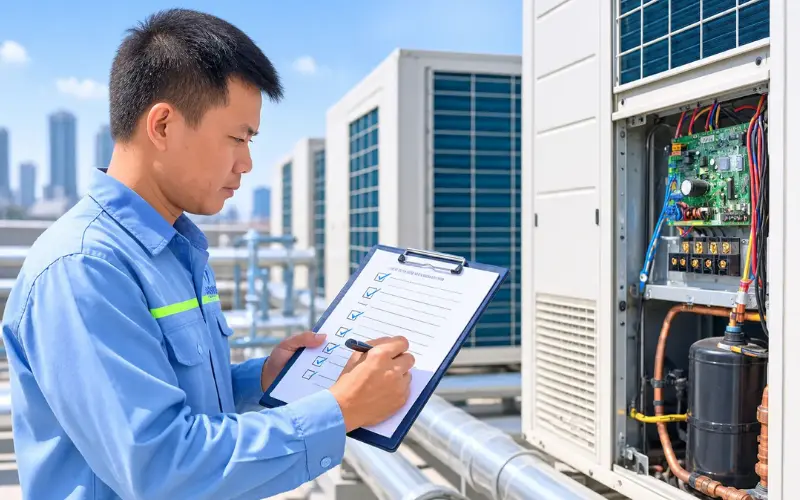
5.1. Step 1: Conduct an Overall System Inspection
Before beginning maintenance work, technicians should document the equipment’s current condition, fault history, and operating parameters.
This information provides a baseline for identifying required maintenance tasks and evaluating system performance after servicing.
5.2. 5.2. Step 2: Clean and Inspect Critical Components
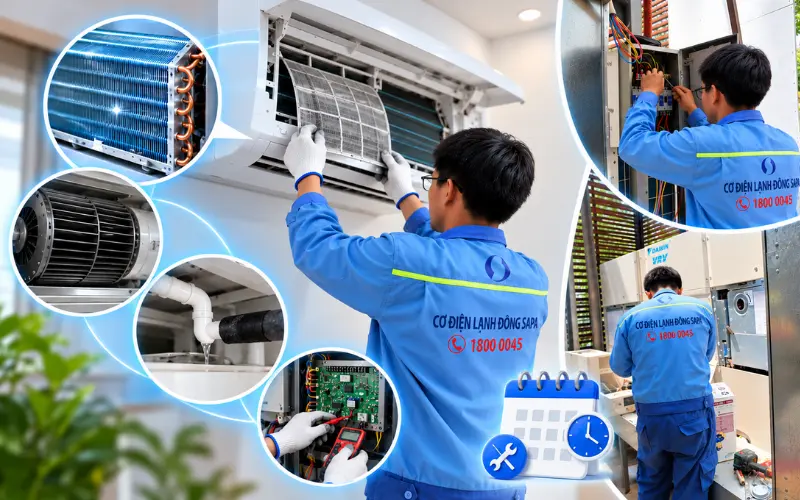
For VRV/VRF systems, typical maintenance tasks include:
- Cleaning heat exchanger coils and air filters, and inspecting condensate drain lines.
- Inspecting electrical connections, sensors, and control systems
- Measuring and verifying operating parameters according to manufacturer specifications.
- Checking for signs of refrigerant leakage when necessary.
For chiller systems, maintenance may include inspecting compressors, pumps, heat exchangers, chilled water systems, and cooling towers.
Importantly, central air conditioning maintenance does not require routine refrigerant recharging. Refrigerant should only be added when a shortage has been confirmed through proper technical assessment, after the cause of any leakage has been identified and corrected.
5.3. Step 3: Perform Operational Testing and Prepare a Technical Report
Once maintenance is completed, technicians should test system operation, compare operating parameters against expected values, and document any remaining abnormalities.
A maintenance report helps building owners monitor equipment condition and plan future inspections more effectively.
>>> READ MORE: VRV vs. Chiller: Choosing the Right HVAC System in 2026
6. How Can You Optimize Central Air Conditioning Maintenance Costs?
Reducing maintenance costs does not mean cutting back on inspections or skipping essential maintenance tasks.
A more effective approach is to develop a maintenance plan tailored to actual operating conditions.
Building owners should maintain operating records, track recurring faults, and prioritize issues that affect safety, system efficiency, or operational reliability.
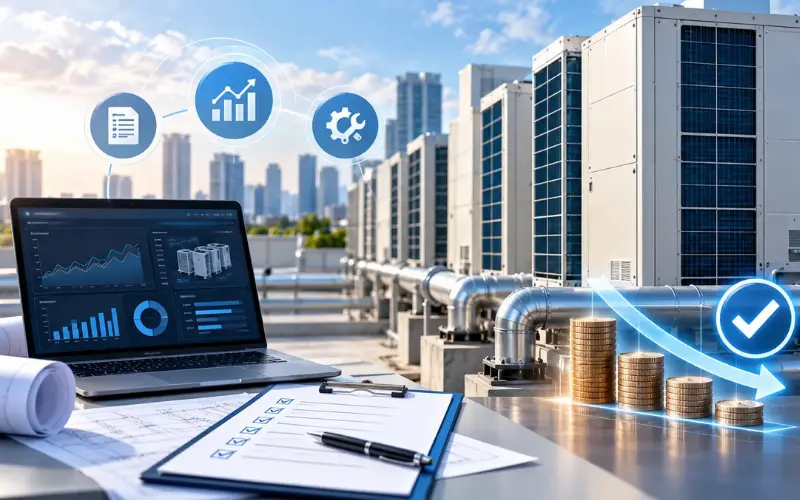
For large-scale HVAC systems, condition-based maintenance (CBM) may be worth considering. Rather than relying solely on fixed time intervals, this approach uses operational data to help determine when inspections or maintenance interventions are necessary.
However, condition-based maintenance must still be combined with mandatory maintenance procedures specified by the equipment manufacturer.
7. Frequently Asked Questions About Central Air Conditioning Maintenance
7.1. Does an Infrequently Used Central Air Conditioning System Still Need Maintenance?
Yes. Even equipment that is rarely operated can experience dust accumulation, moisture buildup, standing water, or problems with electrical connections. The system should be inspected before being restarted after an extended period of inactivity.
7.2. Does Central Air Conditioning Maintenance Require Refrigerant Recharging?
No. A properly functioning, sealed refrigeration system does not require refrigerant to be added at regular intervals. Refrigerant should only be added when technically justified and in accordance with the appropriate service procedures.
7.3. Should a 15-Year-Old Central Air Conditioning System Be Replaced?
Not necessarily. The decision should be based on equipment condition, operating efficiency, repair history, spare parts availability, and the economic feasibility of replacement.
8. Timely Central Air Conditioning Maintenance for Long-Term Reliability
An older central air conditioning system is not necessarily in poor condition, just as newly installed equipment is not exempt from maintenance requirements.
Timely central air conditioning maintenance helps preserve system efficiency, detect potential problems early, and extend equipment service life.
With experience in HVAC consulting, design, and installation, Dong SaPa provides inspection, technical consultation, and maintenance services for VRV/VRF and chiller systems, tailored to the specific requirements of each building.
If your air conditioning system has not been inspected for an extended period or is showing signs of abnormal operation, contact Dong SaPa for professional advice on the most appropriate maintenance solution.
EAST SAPA ENGINEERING CORPORATION
- Showroom: 456/72 Cao Thang (Extended), Hoa Hung Ward, Ho Chi Minh City.
- 24/7 Project Hotline: 0988 200 200 (Mr. Vinh)
- Email: quangvinh@dongsapa.com.vn
- Website: dongsapa.com.vn
Other news